
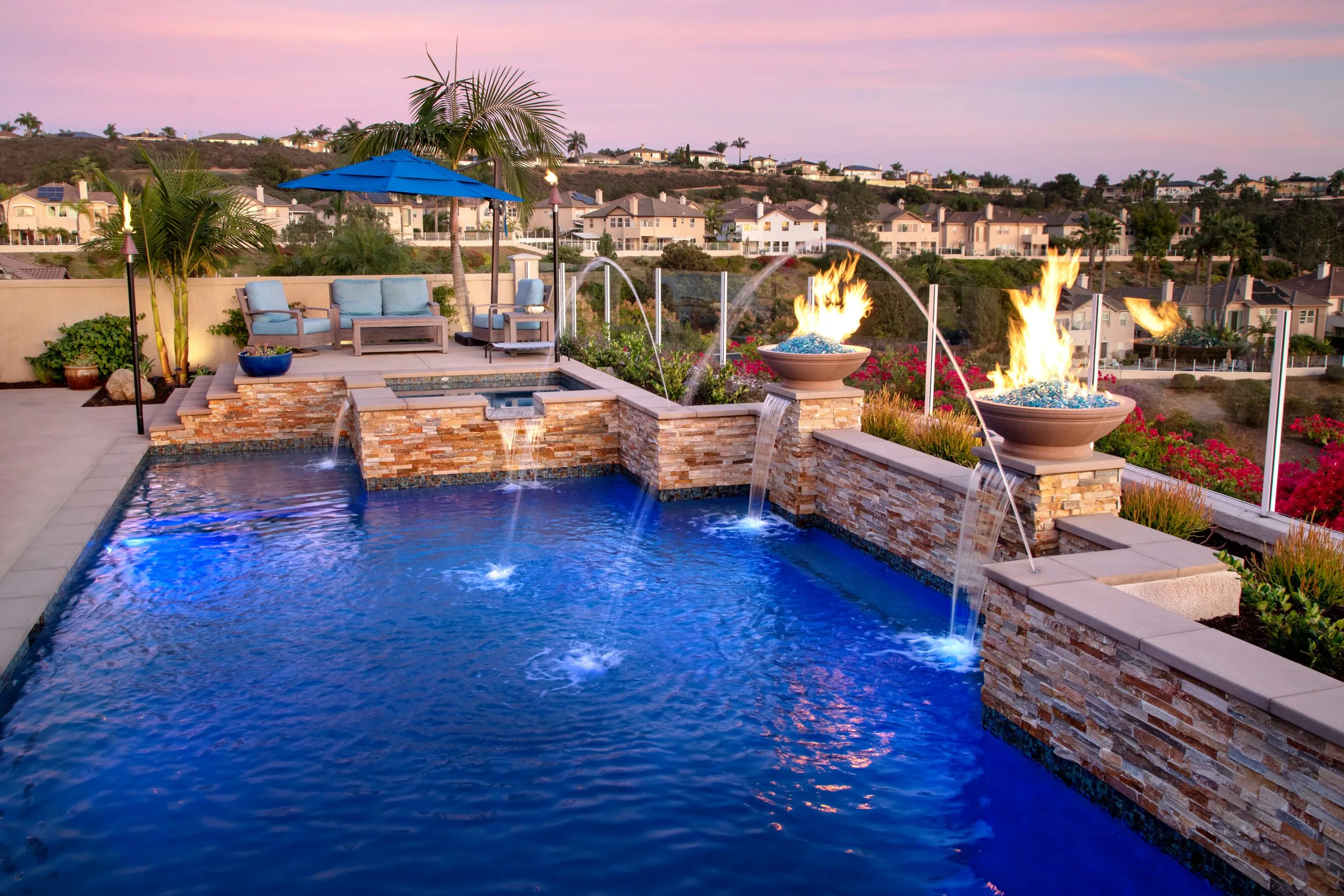

When considering the perfect pool for your home, it’s essential to take into account how climate conditions can influence your choices. Understanding the implications of temperature, humidity, and seasonal variations will help you make the best decisions about the type, materials, and features of your pool.
In warm areas like San Diego, pools are a year-round attraction. Here’s how temperature can influence your pool choice:
Type of Pool: In consistently warm temperatures, homeowners often prefer custom in-ground pools. Options such as infinity edge pools or freeform designs can create a beautiful aesthetic and enhance your outdoor living experience.
Heating Systems: For added comfort during cooler evenings, installing an energy-efficient heating system is crucial. Check out our energy-efficient pool services for insights on maintaining pool temperature without high energy costs.
In cooler regions, the pool might be a seasonal feature. Considerations include:
Type of Pool: Homeowners may lean toward lap pools or plunge pools that provide a quick refresh during the summer months but require less maintenance in colder weather.
Protection Features: Investing in pool covers or employing heating solutions can significantly mitigate the impacts of cold weather.
In coastal areas, where humidity is higher, special considerations must be taken into account:
Material Durability: The materials used in construction must be resistant to chlorine and moisture damage. Explore options like coastal-safe pool materials that maintain their integrity in high-humidity environments. Read more about this in our guide on maintaining pool quality in coastal areas.
Corrosion Protection: Regular upkeep is vital. Saltwater systems, while popular, can accelerate corrosion. Effective monitoring and maintenance strategies are essential for durability.
In areas with low humidity, pools can experience a higher evaporation rate, leading to increased water usage. Solutions include:
Water Features: Consider incorporating water features that create a cooling effect without excessive water loss.
Landscaping Choices: Surround your pool with drought-resistant plants that complement the environment while reducing water evaporation.
In regions with distinct seasonal shifts, it’s important to think about how your pool will serve you throughout the year:
Inflatable vs. In-ground Pools: If your climate offers hot summers but cold winters, you may choose more portable options like inflatable pools for summer use and close them during winter.
Aesthetic Transformations: Winter can be an excellent time for renovations. A design-focused renovation could include adding features such as spas or tropical landscaping, appealing aesthetics for year-round enjoyment. Learn more about transforming your outdoor space.
The right materials not only enhance aesthetic appeal but also affect longevity and maintenance. Here’s a brief overview:
For more insight into selecting deck materials for your pool, visit how to choose deck materials for a San Diego pool.
High humidity may require pools to have additional corrosion protection features and more durable materials.
Custom in-ground pools with features like infinity edges are popular choices for enhancing outdoor living in warm climates.
Yes, differing climate conditions significantly affect evaporation rates, which can determine how frequently your pool needs to be filled and treated.
Understanding how climate conditions affect pool choices is critical for any homeowner considering a new pool installation or renovation. Tailoring your pool to meet the specific demands of your local climate will enhance your overall enjoyment and investment. By considering factors such as temperature, humidity, and seasonal changes, you can select not just a pool, but a complete outdoor living experience that aligns with your lifestyle and environment.
DISCLAIMER: The information in this article has been generated by artificial intelligence, not a pool professional. The accuracy of the information in this article has not been verified by Mission Pools prior to publication and will not be updated. Therefore, this article should not be relied upon in lieu of independent research or consultation with a California pool installation or maintenance firm.


