
An above ground pool costs less upfront, but that number rarely tells the full story.
Above ground swimming pool construction and inground builds differ in lifespan, design flexibility, permit requirements, and long-term return on your property. Choosing based on price alone usually leads to regret within a few years.
This guide breaks down both options side by side so you can match the right pool type to your space, budget, and how you plan to use it long-term.
At Mission Pools, we’ve guided Southern California homeowners through this exact decision since 1960.
An above ground pool sits on top of your yard rather than being dug into it.
The structure uses a metal or resin frame to support a vinyl liner, and the entire assembly typically stands three to five feet above ground level.
These pools appeal to homeowners who want quick access to swimming without the commitment of a permanent build. Most above ground pool installation projects wrap up within one to three days on a leveled gravel pad or concrete slab.
One detail that often gets overlooked is base prep. The ground must be level within one inch across the entire footprint. Anything beyond that tolerance puts uneven stress on the walls and frame, which shortens the pool’s lifespan significantly.
An inground pool is a permanent structure built directly into the earth. Crews excavate the yard, install a reinforced framework, and apply the shell material. The three main types each serve different priorities:
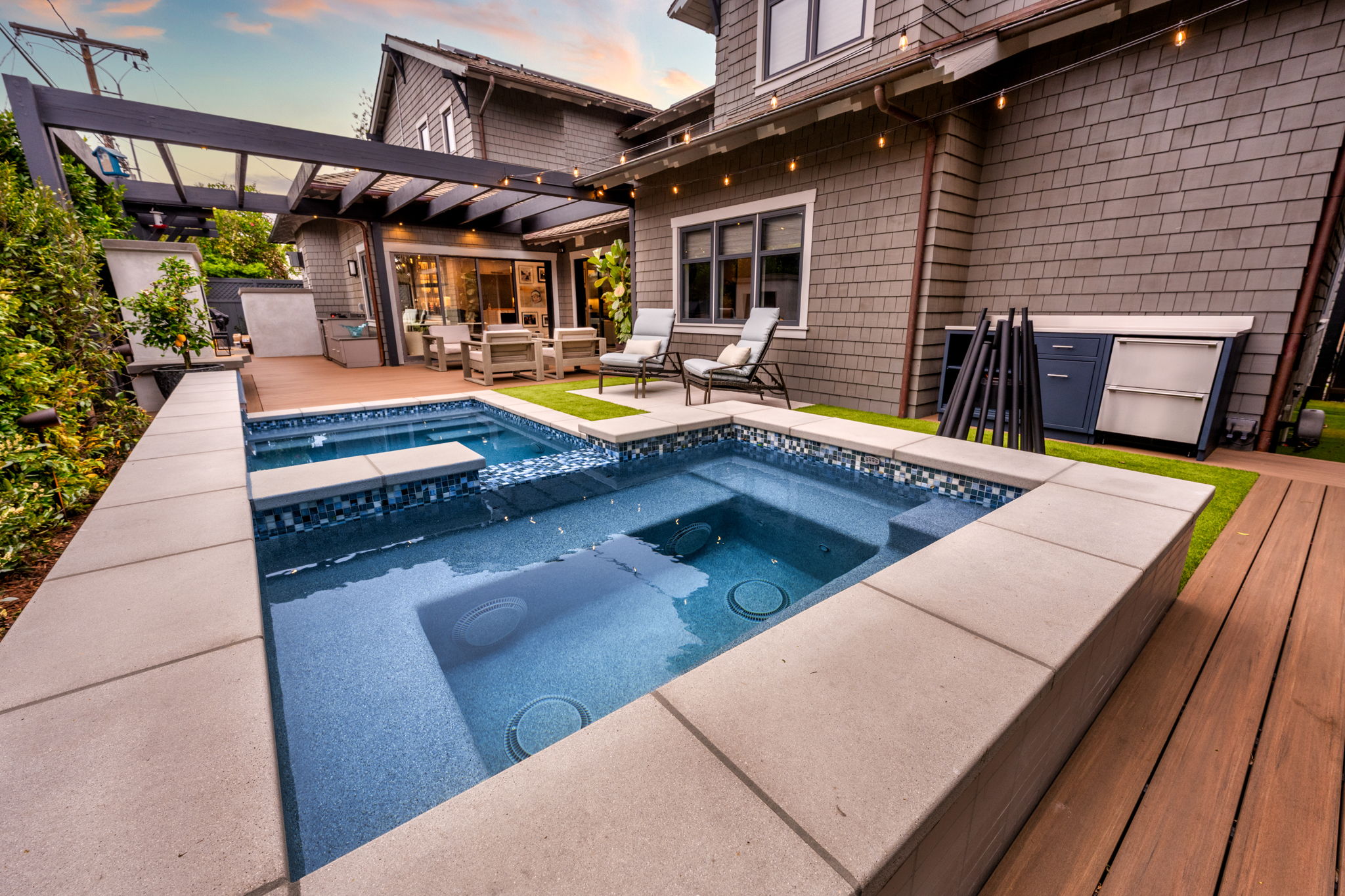
Because the pool sits below grade, decking, coping, landscaping, and water features all tie into one unified outdoor space. That integration is why inground construction remains the preferred choice for homeowners planning a long-term investment.
The above ground vs inground pool decision comes down to a handful of core differences that ripple through every stage of ownership.
The above ground pool installation process is straightforward compared to an inground build.
Crews start by leveling the site, removing sod, grading the soil, and adding a compacted sand or gravel base.
Once the base is prepped, steel or resin wall panels are assembled, braced with uprights, and topped with rails. Plumbing connections for the skimmer and return jets are cut into the wall, and the vinyl liner is draped inside and secured under the top rail.
From there, the pump and filter connect, the pool fills, and chemical balancing begins. As Family Handyman notes, most installations wrap up in one to three days depending on site prep and pool size.
Inground pools are our specialty at Mission Pools, and have been since 1960.
We focus on inground builds because they outperform every alternative in the areas that matter most. Concrete shells last 50 years or more, every design is fully custom to your backyard, and a permanent structure integrates with your landscaping and hardscape in ways that genuinely boost property value.
The build moves through several key phases.
From permit to plaster, expect three to six months. Breaking down the inground swimming pool construction costs and design factors helps you plan that timeline realistically.
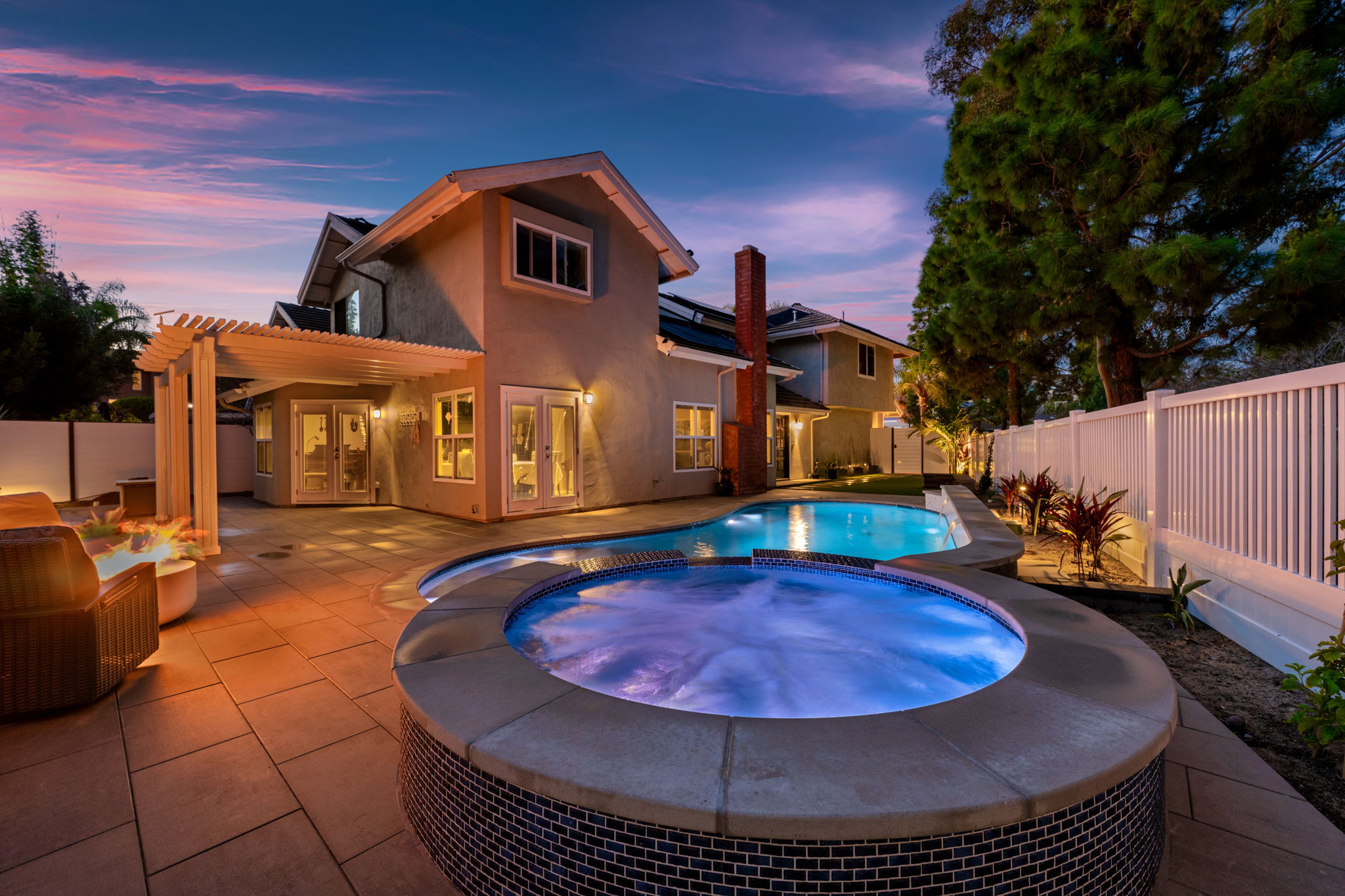
The cost of above ground pool installation stays well below inground pricing. Entry-level steel-frame pools with basic filtration start around $1,500 to $3,000. Mid-range models with resin components and upgraded pumps typically land between $4,000 and $8,000.
Extras push the total higher. Add a surrounding deck, upgraded liner, or saltwater system and you can reach $10,000 to $15,000. According to NerdWallet’s 2026 pool cost guide, the average above ground setup runs $1,000 to $6,000, making it the most accessible entry point for backyard swimming.
Inground pool pricing reflects the complexity of the build. According to Angi’s 2026 cost data, the national average sits around $65,000, though California pricing runs 15 to 25 percent higher due to labor, permitting, and soil conditions.
Concrete pools typically range from $50,000 to $120,000, fiberglass shells from $45,000 to $85,000, and vinyl-liner builds from $35,000 to $65,000.
Upgrades like spas, fire features, and automation can push custom builds past $150,000. For larger projects, understanding your swimming pool financing options helps bridge the gap between vision and budget.
Above ground pools ship in preset round and oval shapes. That limits your layout, though a wraparound deck, strategic landscaping, and ambient lighting can still make the space feel personal.
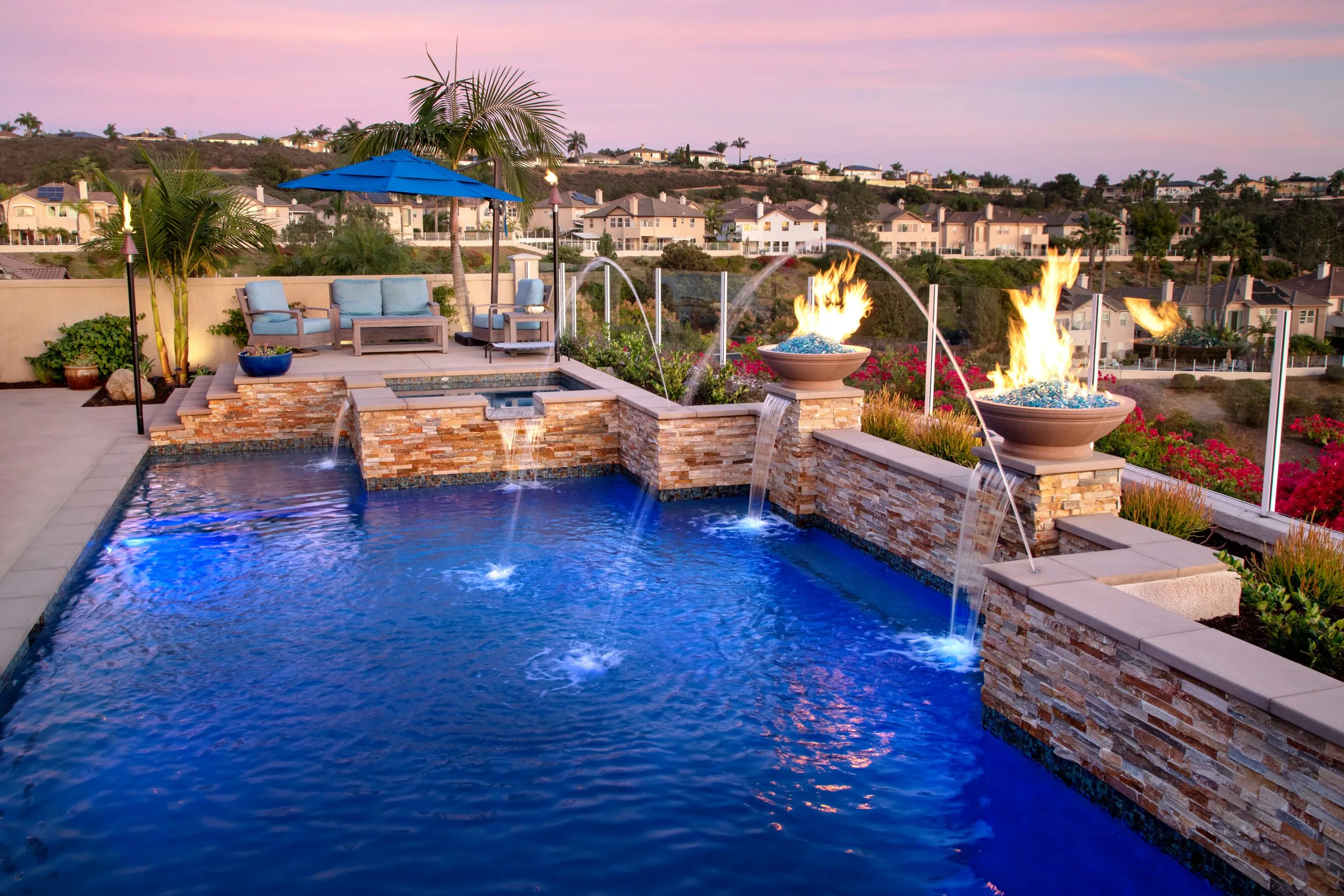
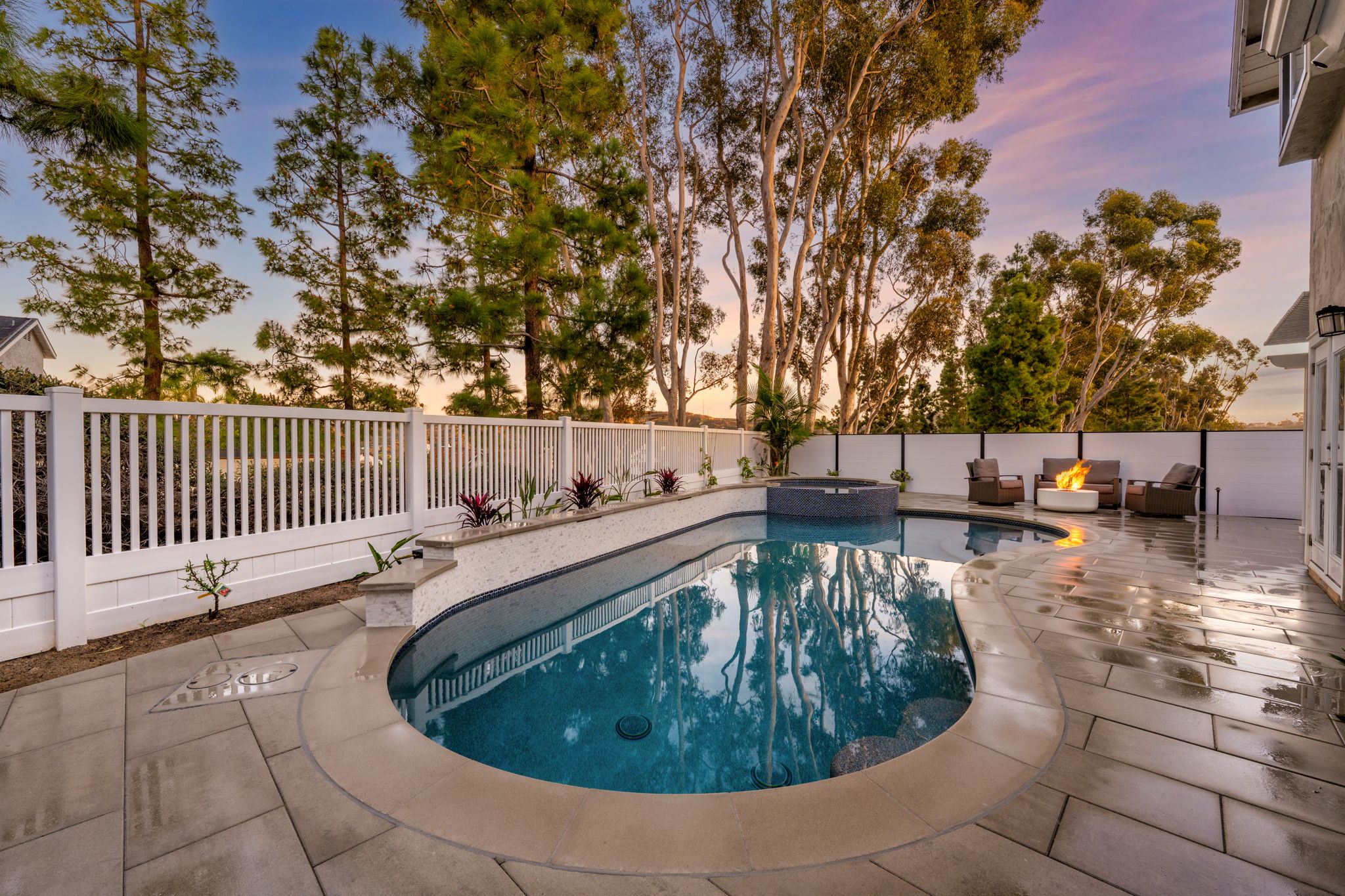
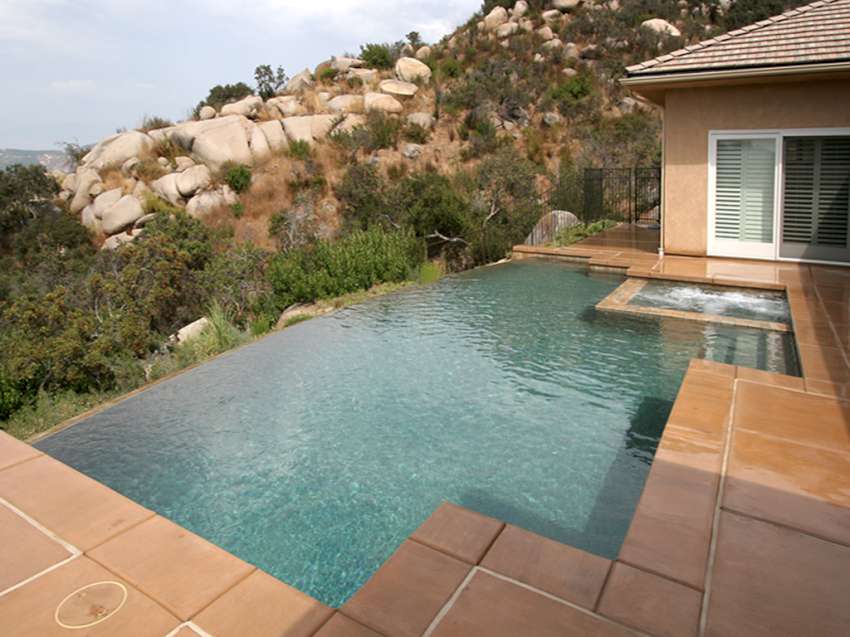
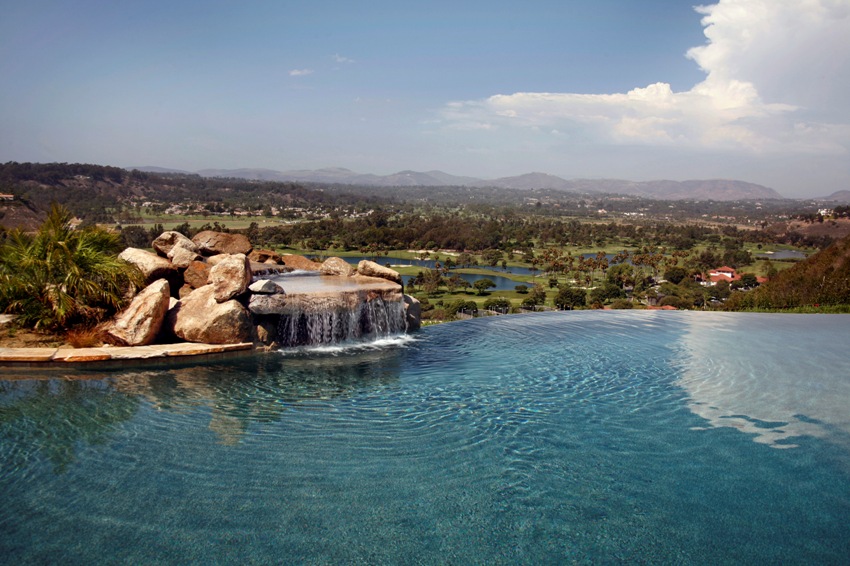
Inground pools open the door to virtually anything. Geometric rectangles, freeform curves, vanishing edges, beach entries, and tanning ledges can all be designed to match your backyard and your home’s architecture.
That design freedom is what separates custom builds from standard installs. For inspiration on what’s achievable, explore these modern swimming pool designs shaping today’s luxury outdoor spaces.
Above ground pools last roughly 10 to 20 years with proper care. The frame holds up well, but the vinyl liner typically needs replacement every 5 to 9 years due to UV exposure and chemical wear.
Inground pools play a longer game:
Regardless of type, durability traces back to build quality and consistent ongoing care.
Routine care for an above ground pool revolves around water chemistry, filtration, and liner condition. Stay on top of these essentials:
Annual maintenance typically runs $300 to $700, covering chemicals, filter media, and minor part replacements.
Inground pools require similar chemical management but add a few layers of complexity.
Surface brushing, equipment servicing, and periodic resurfacing all factor into your long-term care routine:
Annual maintenance typically costs $1,200 to $2,500. Professional service plans simplify the work and keep your water quality consistent without the guesswork.
Pool safety applies to every installation. California’s Swimming Pool Safety Act requires all new or remodeled residential pools to include barrier fencing and at least two approved drowning prevention features.
Above ground pools have a natural height barrier, but any attached deck, ladder, or step creates an access point that needs its own gate or removal strategy. Inground pools sit at ground level, so California mandates a minimum fence height of 60 inches with self-closing, self-latching gates.
Regardless of type, no amount of hardware replaces an attentive adult near the water.
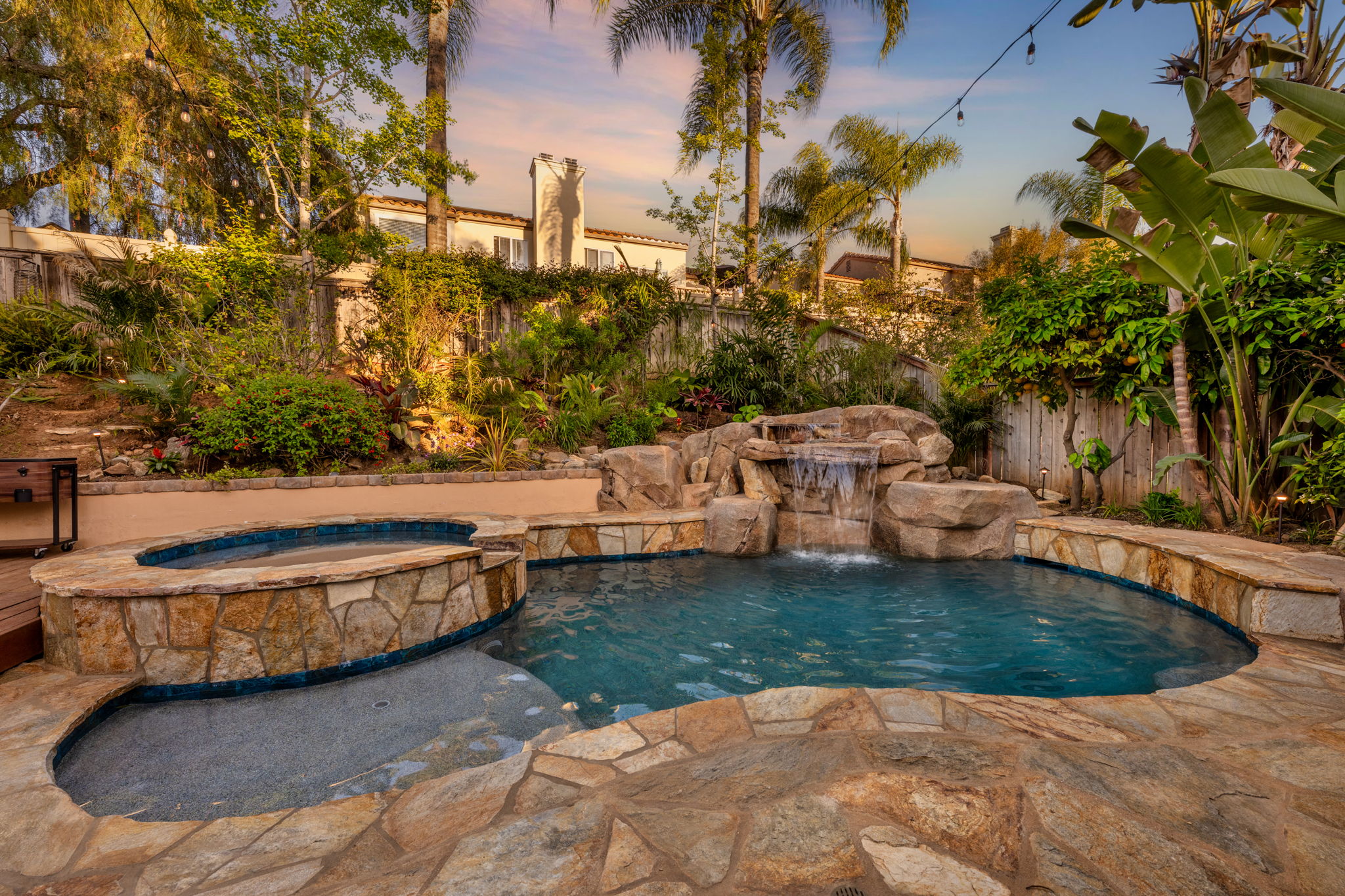
An inground pool can raise your home’s resale value by an estimated 7 to 15 percent, according to Texas Real Estate Source. That boost reflects the permanent nature of the installation and buyer demand in warm-climate markets like Southern California.
Above ground pools rarely contribute to resale value. Some buyers view them as temporary additions, and others see removal costs as a liability.
Aesthetically, inground pools become part of your yard’s architecture. Stone decking, integrated planters, and water features all tie into one cohesive space that above ground setups rarely achieve.
Above ground pools make sense in specific situations. Recognizing when they fit helps you avoid overspending on a pool type that exceeds your current needs.
The above ground pool benefits come down to accessibility, lower cost, simpler logistics, and the flexibility to remove or relocate if your plans change.
Inground construction fits homeowners who are building for the long term and want the backyard to reflect that commitment.
For homeowners ready to explore what a custom build looks like, our new pool construction process shows how we take a project from concept to completion.
Pool construction benefits from professional oversight regardless of type.
For inground work, the stakes are especially high. Soil conditions, structural reinforcement, plumbing, and electrical code all need to be right the first time.
That’s why choosing your swimming pool builder partner carefully matters more than most homeowners realize. At Mission Pools, we’ve spent over six decades building and renovating pools across Southern California. That experience shows in every project we deliver.
Learn more about where that commitment comes from through our story.
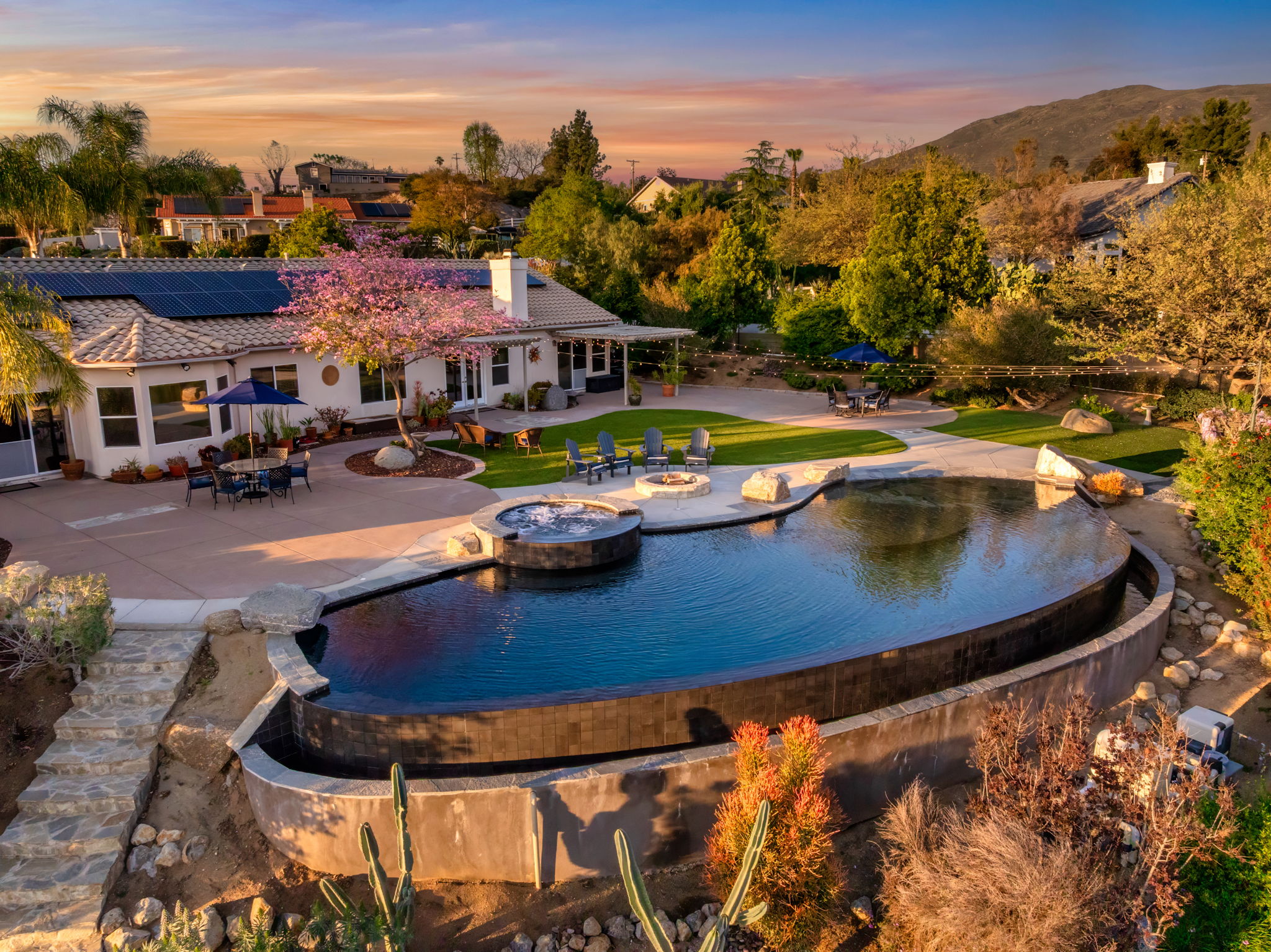
The above ground vs inground pool decision comes down to budget, timeline, and how you picture your backyard years from now.
Above ground pools deliver quick, affordable access to swimming. Inground pools offer lasting value, full design freedom, and the kind of transformation that changes how you use your outdoor space.
Both options bring real enjoyment when they match your situation. If you’re weighing the choice and want expert perspective, reach out to our team and we’ll walk through your yard, your goals, and the path that makes the most sense.
Most above ground pool installation projects finish within one to three days after site leveling. Permitting varies by city, and deck or accessory additions can extend the timeline slightly depending on complexity.
Yes. The cost of above ground pool installation typically runs $1,500 to $15,000 including accessories. Inground swimming pool construction starts around $35,000 and often exceeds $100,000 for custom concrete builds in Southern California.
Above ground pools rarely add resale value since buyers view them as temporary. Inground construction, especially concrete or fiberglass, can boost property value by 7 to 15 percent in warm-climate markets. This is one key factor in the above ground vs inground pool decision.
The above ground pool benefits center on accessibility. You’ll spend less upfront, install in days instead of months, and maintain flexibility to relocate or remove. You’ll balance chemistry twice weekly, clean the filter regularly, and budget $300 to $700 annually for chemicals and replacements.
Concrete inground pools last 50 years or more with periodic resurfacing. Above ground swimming pool construction produces structures that typically last 10 to 20 years, with vinyl liners needing replacement every 5 to 9 years depending on care and sun exposure.
You know . . . you just do not wake up one day and decide you can be someone’s partner in business. Strong relationships take...

Southern California is known for a lifestyle second to none. Our area that started out as an arid desert has now become a land of...
Yesterday was an example of why my brother and I enjoy this business so much. Contracting is all about solving problems…problem/solution management.


