
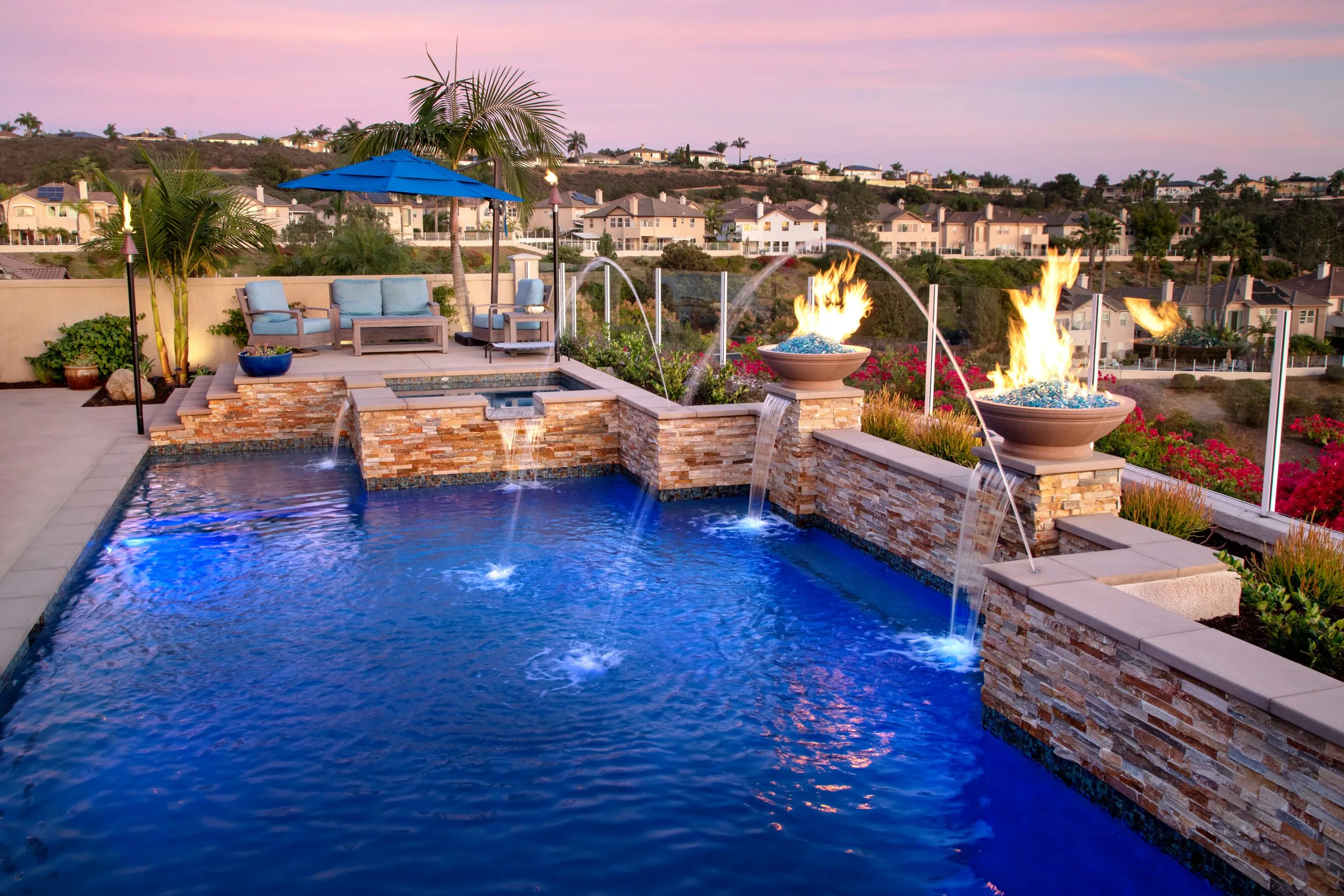

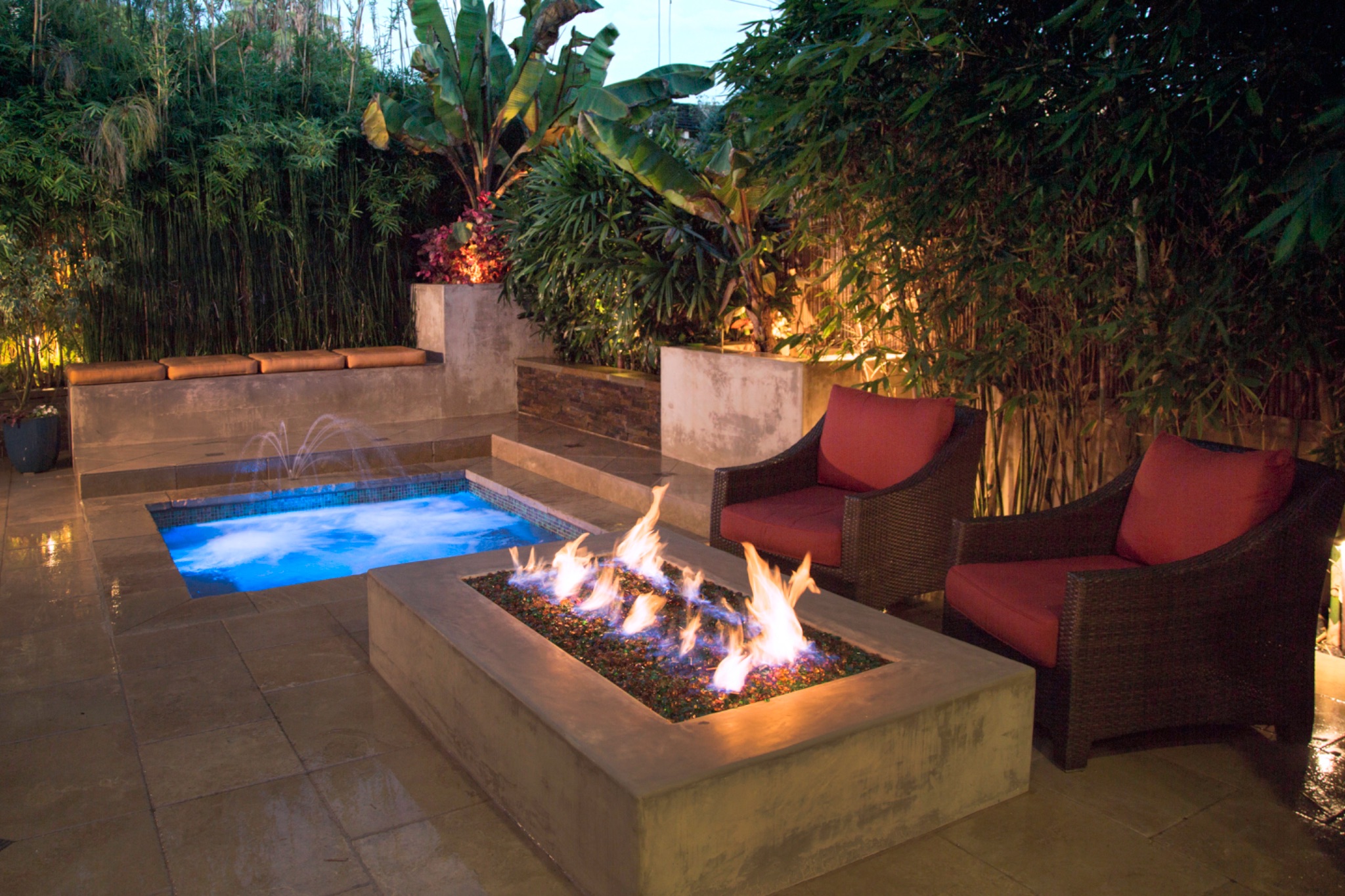
The average inground pool cost ranges from $35,000 to over $100,000.
That gap exists because swimming pool construction cost depends on variables most homeowners don’t consider until they’re deep into the process. Size, materials, site conditions, and features all shift the number significantly.
This guide breaks down the real cost to build a swimming pool by type, region, and scope.
You’ll also learn where backyard pool installation cost surprises tend to hide and how to avoid them. At Mission Pools, we’ve been building pools across Southern California since 1960, so these numbers come from decades of real project data.
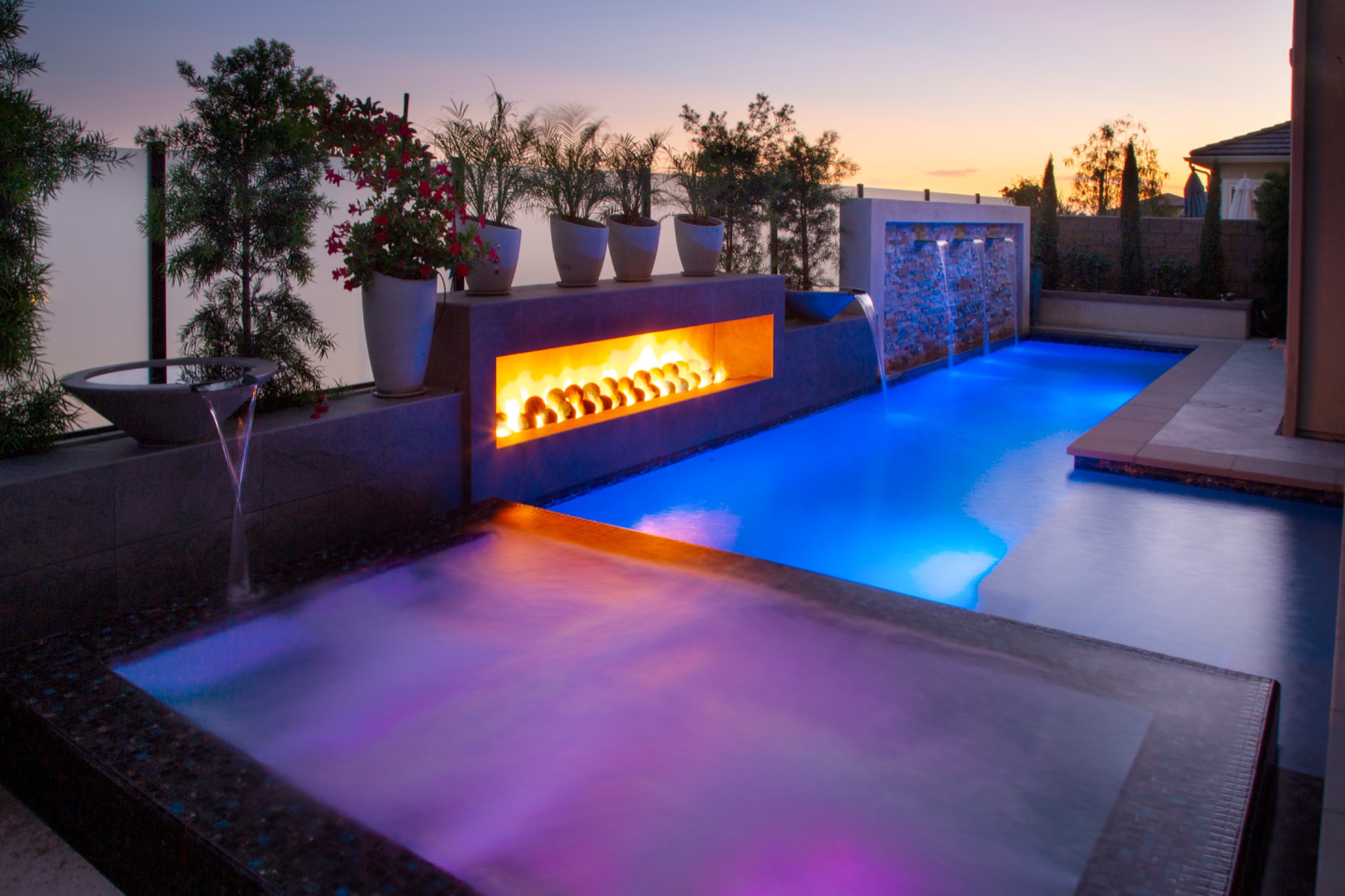
Swimming pool construction cost continues to climb nationally.
According to Angi’s 2026 inground pool cost data, most homeowners spend between $44,000 and $87,000, with the national average landing around $66,000 for a standard inground pool.
However, if you’re in Southern California, expect to pay more. Labor rates here run 40 to 60% above the national average, pushing regional costs to $65,000 to $130,000 for the same build. Permits, regulatory complexity, and competitive residential markets add further pressure in coastal and Los Angeles County areas.
When budgeting, remember that your total cost includes more than construction alone. Design, permits, equipment, and site preparation all factor in. This guide breaks down each component so you understand exactly where your money goes.
Now that you have a sense of overall pricing, the next question is which type fits your budget.
Concrete, fiberglass, and vinyl each come with different price tags and trade-offs that shape both your upfront cost and long-term ownership experience.
Concrete pools are the gold standard for customization and durability.
Gunite construction involves spraying a concrete and sand mixture into a reinforced steel framework, then finishing with plaster, aggregate, or tile. This method gives you virtually unlimited design flexibility, including custom shapes, tanning ledges, spillover spas, and integrated water features.
Expect to invest $50,000 to $150,000 or more depending on size and complexity.
If you’re considering this route, our guide on concrete pool construction breaks down why so many homeowners choose it for long-term value.
If concrete feels like more than you need, fiberglass is a strong middle ground. These pools arrive pre-manufactured as complete shells, ready to drop into an excavated hole.
That streamlined process means faster installation and fewer on-site variables compared to concrete. Budget $30,000 to $85,000 for fiberglass.
You get better longevity than vinyl with a more predictable build timeline.
For the most budget-friendly option, vinyl liner pools start at $25,000 to $65,000. A flexible PVC membrane stretches over steel walls and a concrete floor, allowing creative designs at lower price points.
However, vinyl is less common in Southern California luxury markets due to durability concerns. Modern liners last 10 to 15 years with proper care, but they require periodic replacement, which adds to your long-term ownership cost.
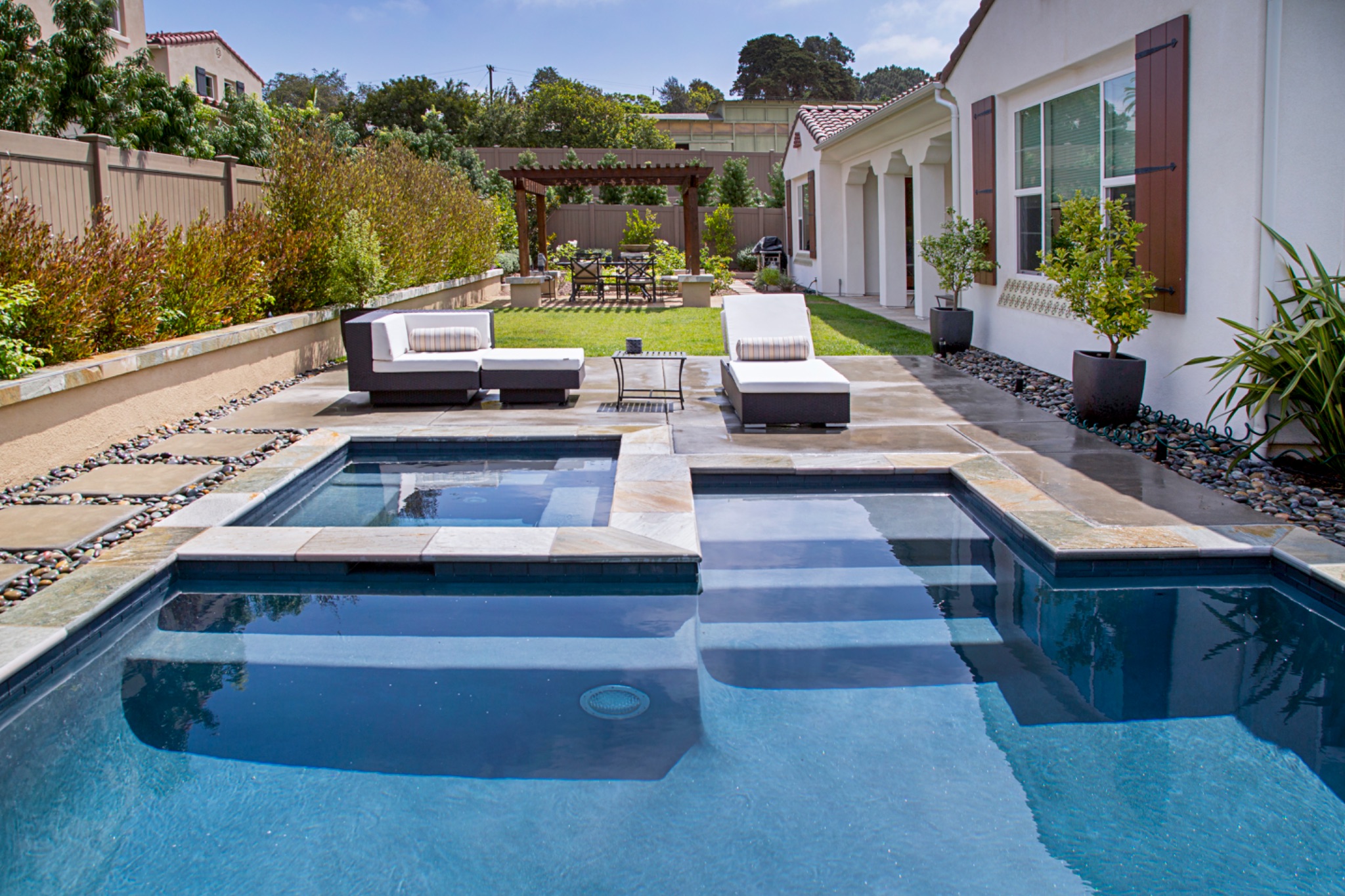
Choosing your pool type is just the starting point. Several other variables shape your final number, and understanding them upfront helps you avoid surprises once construction begins.
The biggest cost driver is square footage. More surface area means more excavation, materials, and equipment. A small lap pool (30×8 feet) typically costs $25,000 to $45,000, while a resort-style pool (20×40 feet with varying depth) runs $60,000 to $120,000.
If your yard is tight, a plunge pool offers a smart alternative. At 300 to 400 square feet, you’re looking at $20,000 to $35,000 with refreshing appeal in compact spaces.
Once you’ve settled on size, design choices shape the rest of your budget.
Simple rectangular pools cost significantly less than complex builds. Each custom feature, whether it’s a vanishing edge, sun shelf, spa jets, or beach entry, adds $3,000 to $15,000 to your total.
LED lighting and smart automation systems now run $4,000 to $8,000. While that’s a real upfront cost, they provide convenience and energy savings that pay you back over time.
Your pool’s interior finish affects both cost and daily feel. Standard white plaster runs $6 to $10 per square foot, making it the most budget-friendly option. Colored plaster and aggregate finishes step up to $12 to $18 per square foot, offering more visual depth and better durability.
For a premium look, glass tile and natural stone finishes sit at $20 to $40 per square foot. The material you choose also influences how often you’ll need to resurface down the road.
The area around your pool matters just as much as the pool itself. Standard concrete pavers start at $4 to $8 per square foot, while premium travertine runs $20 to $30 per square foot.
Natural stone options like flagstone push that range to $20 to $40 per square foot depending on material and layout complexity.
Your equipment choices directly impact what you’ll pay monthly to run the pool. Standard single-speed pumps cost $800 to $1,500, but variable-speed pumps at $2,000 to $3,500 are worth considering.
The U.S. Department of Energy notes that efficient pumps can reduce operating costs significantly, with some homeowners saving up to 75% on pumping costs.
Heating is another key decision. Gas heaters run $1,500 to $3,000, solar systems $3,000 to $6,000, and heat pumps $3,500 to $5,500. Saltwater chlorination adds $1,500 to $2,500 but reduces ongoing chemical costs.
Finally, don’t overlook the less visible costs. Building permits in California average $1,500 to $4,000, while engineering for complex or hillside builds adds $1,000 to $3,000.
Difficult terrain is where budgets shift fast. Hillside pools requiring retaining walls and extensive grading can add $5,000 to $20,000. Tight access routes that force manual excavation increase labor costs by 30 to 50%. Sloped yards needing drainage systems and fill material add another $2,000 to $8,000 to your base cost.
Even with a detailed estimate, some costs don’t show up until you’re mid-project. Planning for these upfront keeps your budget intact.
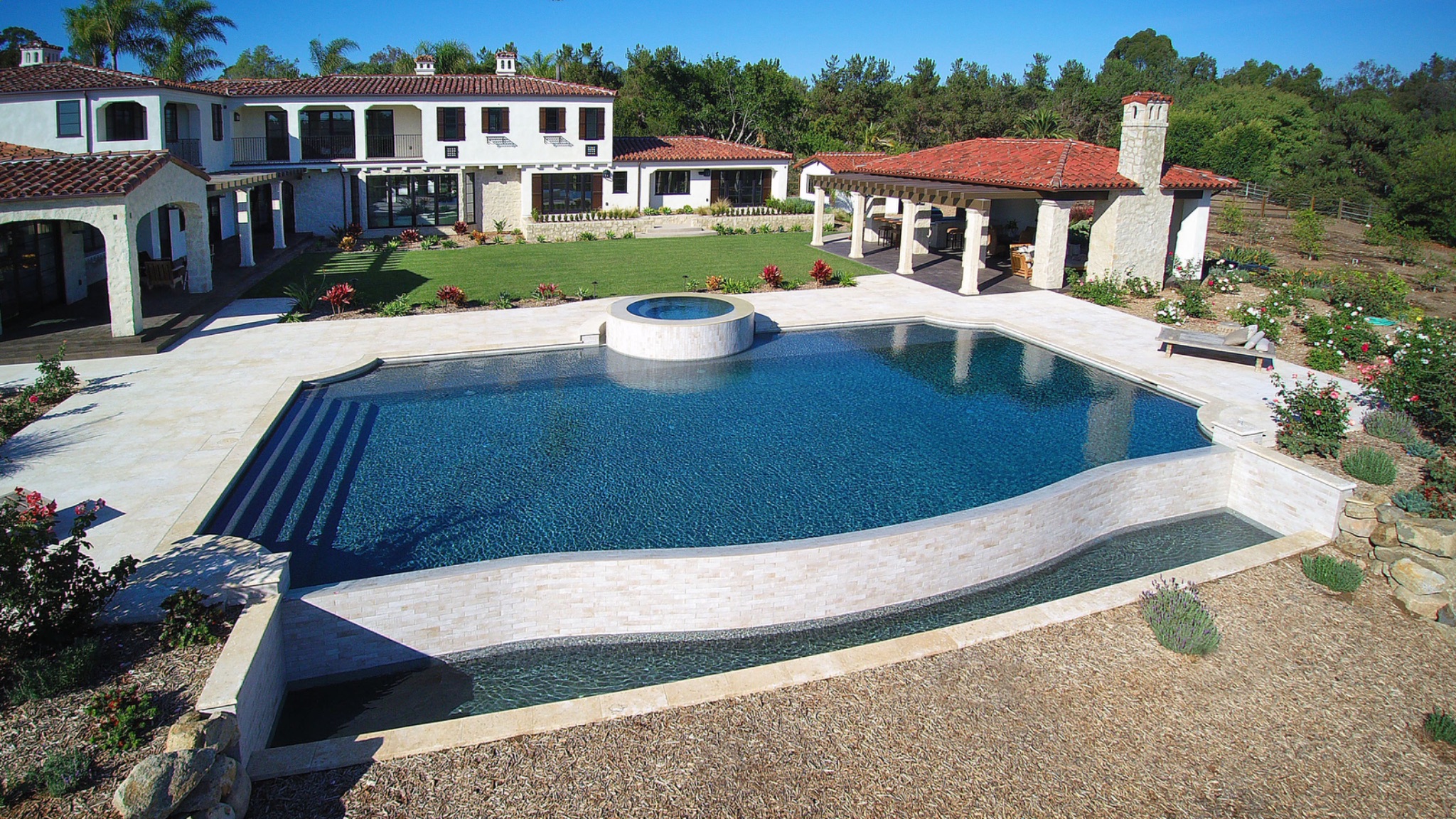
Controlling costs doesn’t mean cutting corners. These strategies help you get the most value from your investment without sacrificing quality.
You don’t need everything on day one. Build your pool with the essentials, then phase in upgrades like tanning ledges, spa jets, and custom finishes over time. This approach spreads your spending and lets you prioritize features based on how you actually use the pool.
Spending $2,000 to $4,000 more on variable-speed pumps, heat pumps, or solar heating saves you $500 to $1,500 annually in energy costs. That investment typically pays for itself in 2 to 4 years.
Never accept a single estimate. Request itemized quotes from at least three licensed pool builders so you can compare scope, pricing, and what’s included. Competitive bidding reveals market rates and helps you identify real value.
Working with a design-build firm like Mission Pools streamlines your project by integrating design, engineering, and construction under one team.
That means fewer change orders, faster approvals, and tighter cost control from start to finish.
Most homeowners don’t pay for a pool outright, so understanding your financing options matters just as much as choosing the right builder. Here’s how the most common paths compare.
Each option carries different trade-offs between rate, flexibility, and speed. Learn more in our guide to pool financing to find the best fit for your situation.
A pool adds lifestyle value immediately, but the financial return is more nuanced. In warm climates like Southern California, you can typically expect to recoup 50 to 70% of your investment at resale, adding $25,000 to $70,000 in perceived value.
Southern California luxury properties tend to perform even stronger. Research indicates well-designed pools in premium markets add 5 to 8% to overall home value, with some high-end properties benefiting by 10 to 15%.
For market-specific data, iBuyer’s analysis on pool resale value breaks down how location and pool type influence your return.
Beyond the numbers, there’s value you can’t put a price on: a gathering space for your family, a venue for entertaining, daily fitness, and years of memories that start the day your pool is finished.
Choosing between concrete, fiberglass, and vinyl comes down to your priorities. Each type suits a different homeowner profile, so understanding the trade-offs upfront saves you from regret later.
Our guide on inground pool types breaks down maintenance, durability, and longevity for each option.
Concrete suits you if customization, durability, and long-term ownership matter most. Fiberglass works well if you want reliability with lower maintenance and faster installation. Vinyl serves budget-conscious homeowners who plan for shorter ownership terms or eventual replacement.
Your property conditions also play a role. Tight lots, sloped terrain, and soil composition can all favor one type over another. A professional site evaluation identifies these factors early and helps match the right pool to your specific property.
If your vision goes beyond a standard build, luxury features will shift your budget significantly. Smart home integration, advanced water features, resort-style finishes, and premium decking can push total costs from $100,000 to $300,000 or more.
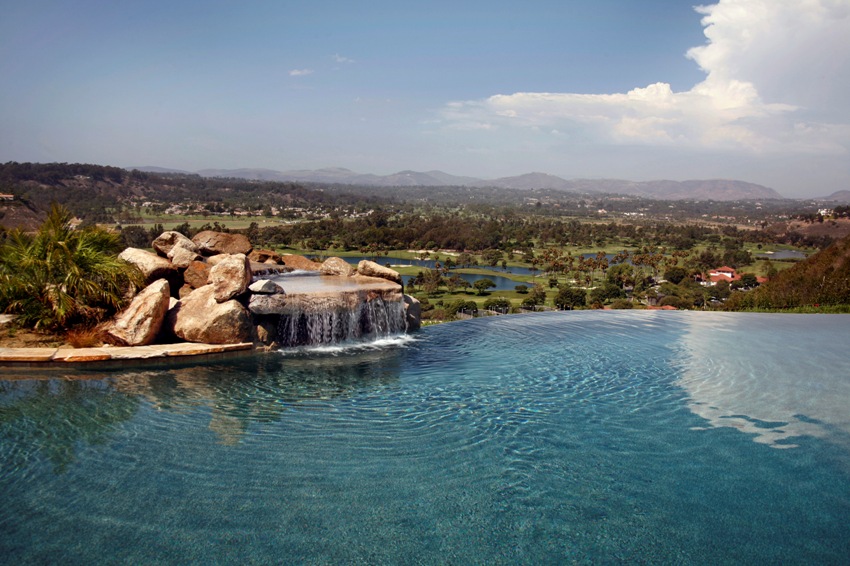
The gap between a standard pool and a luxury build comes down to detail: infinity edges, custom tile mosaics, fire and water combinations, and automation that controls every element from your phone.
These features elevate the experience, but they also require careful planning to avoid scope creep. Review our breakdown of luxury pool costs to see what drives pricing at this level.
Construction timelines vary by pool type. Concrete pools take 8 to 16 weeks from excavation to finishing, fiberglass pools 6 to 12 weeks, and vinyl pools 4 to 8 weeks.
Before construction starts, permit processing adds 2 to 6 weeks depending on your municipality. Engineering reviews for complex designs or hillside properties can extend this further. If you want your pool ready for summer, factor this lead time into your planning.
During the build, your yard becomes a work zone. Expect equipment, noise, dust, and limited access. Communicate regularly with your contractor so you stay ahead of any adjustments.
Seasonal weather matters too. Southern California’s mild climate allows year-round construction, but winter rain can stall excavation and shotcrete application. Spring and early fall give you the most consistent conditions with fewer interruptions.
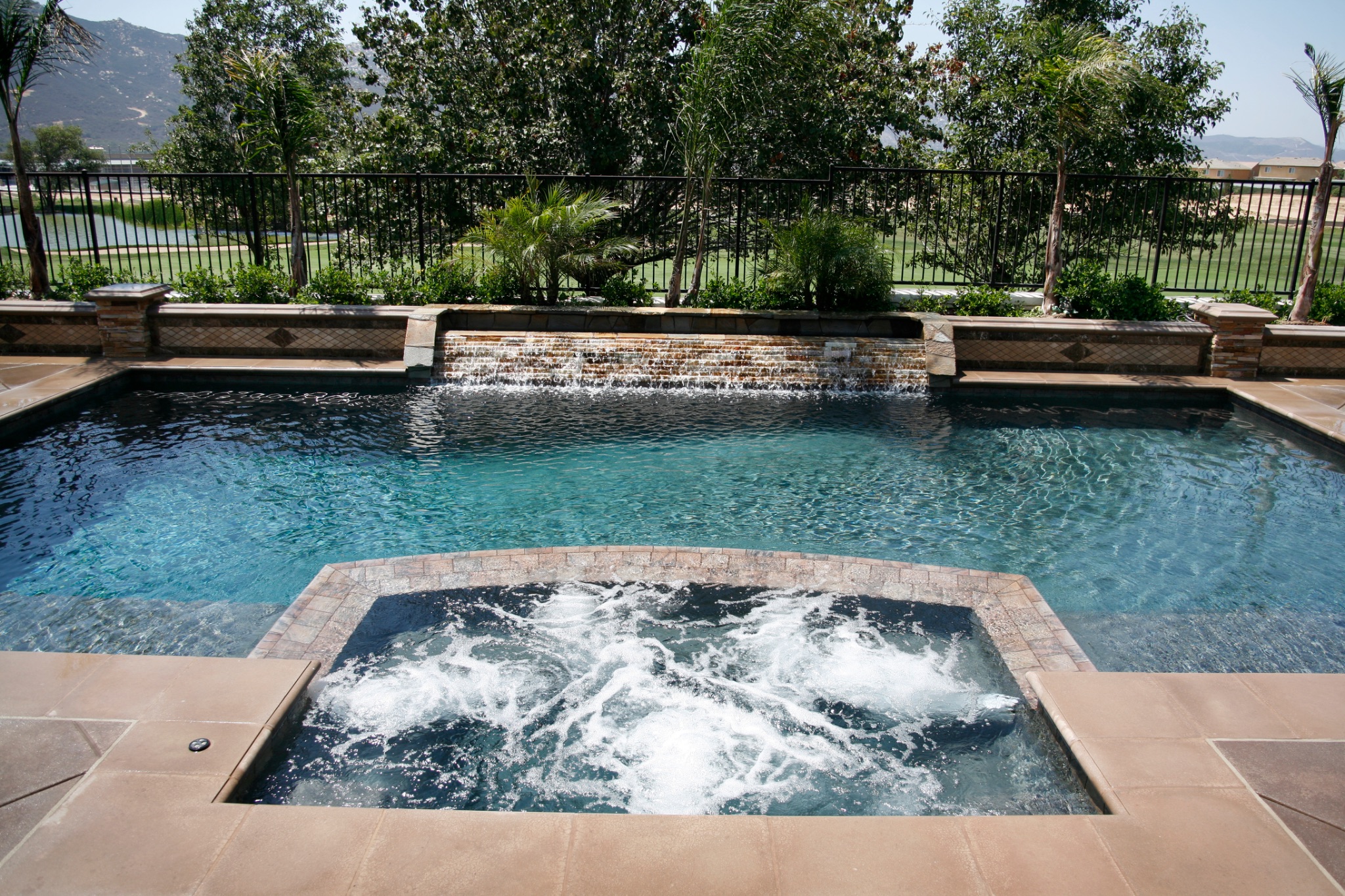
Now you have the numbers, the variables, and the strategy to plan with confidence. The next step is matching all of it to your specific property and goals.
When you’re ready to move forward, whether that’s a new custom build or just getting clarity on costs, reach out to Mission Pools and we’ll walk you through exactly what your project will take.
Vinyl liner pools offer the lowest inground pool cost, typically $25,000 to $65,000. However, if you plan to stay long-term, fiberglass may deliver better value despite higher upfront backyard pool installation cost, thanks to lower maintenance and greater durability.
The cost to build a swimming pool here runs 20 to 40% above national averages. A moderate concrete pool costing $50,000 to $75,000 nationally lands at $65,000 to $130,000 in Southern California due to labor, permits, and design expectations.
Timelines depend on type and complexity. Vinyl pools take 4 to 8 weeks, fiberglass 6 to 12 weeks, and concrete 8 to 16 weeks. These assume approved permits, clear access, and no weather delays during swimming pool construction.
In a typical pool building cost breakdown, the shell represents 25 to 35% of your total budget. Equipment and systems add another 15 to 20%. Choosing energy-efficient options upfront increases initial swimming pool construction cost but lowers annual operating expenses significantly.
Winter doesn’t necessarily reduce how much does it cost to build a pool. However, contractors are less booked, so your project may start and finish faster. The real savings come from availability and scheduling flexibility rather than discounted pricing.
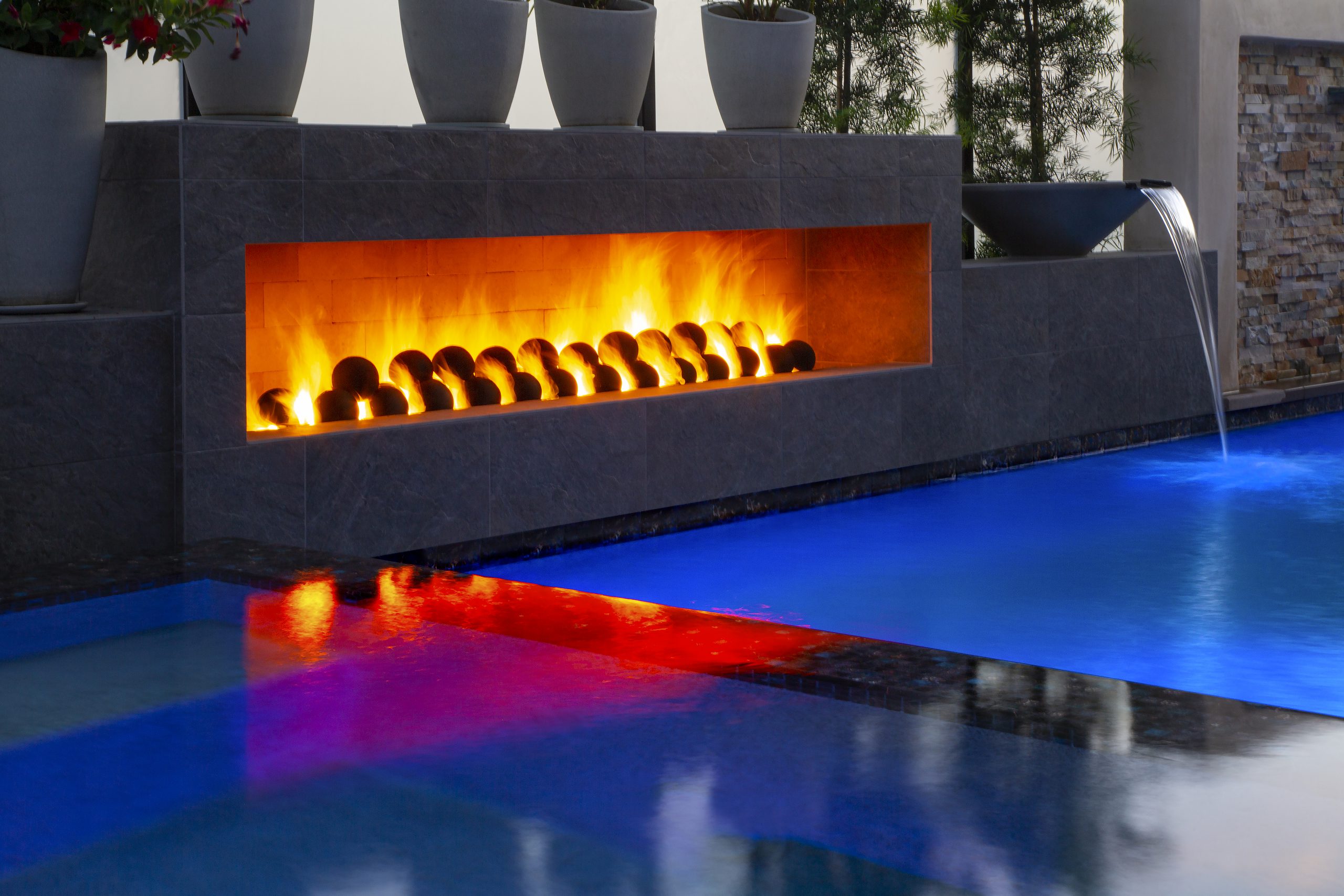
You know . . . you just do not wake up one day and decide you can be someone’s partner in business. Strong relationships take...

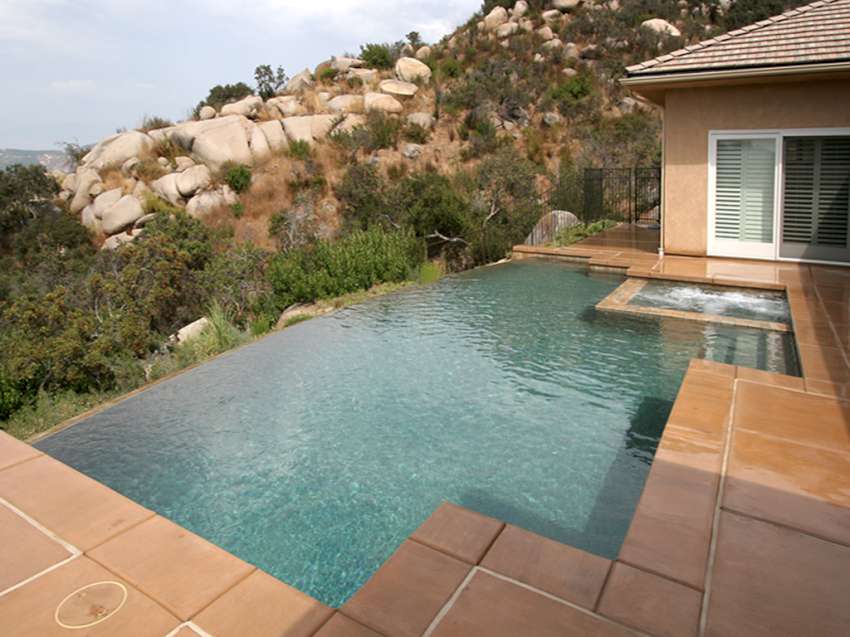
Southern California is known for a lifestyle second to none. Our area that started out as an arid desert has now become a land of...
Yesterday was an example of why my brother and I enjoy this business so much. Contracting is all about solving problems…problem/solution management.


