
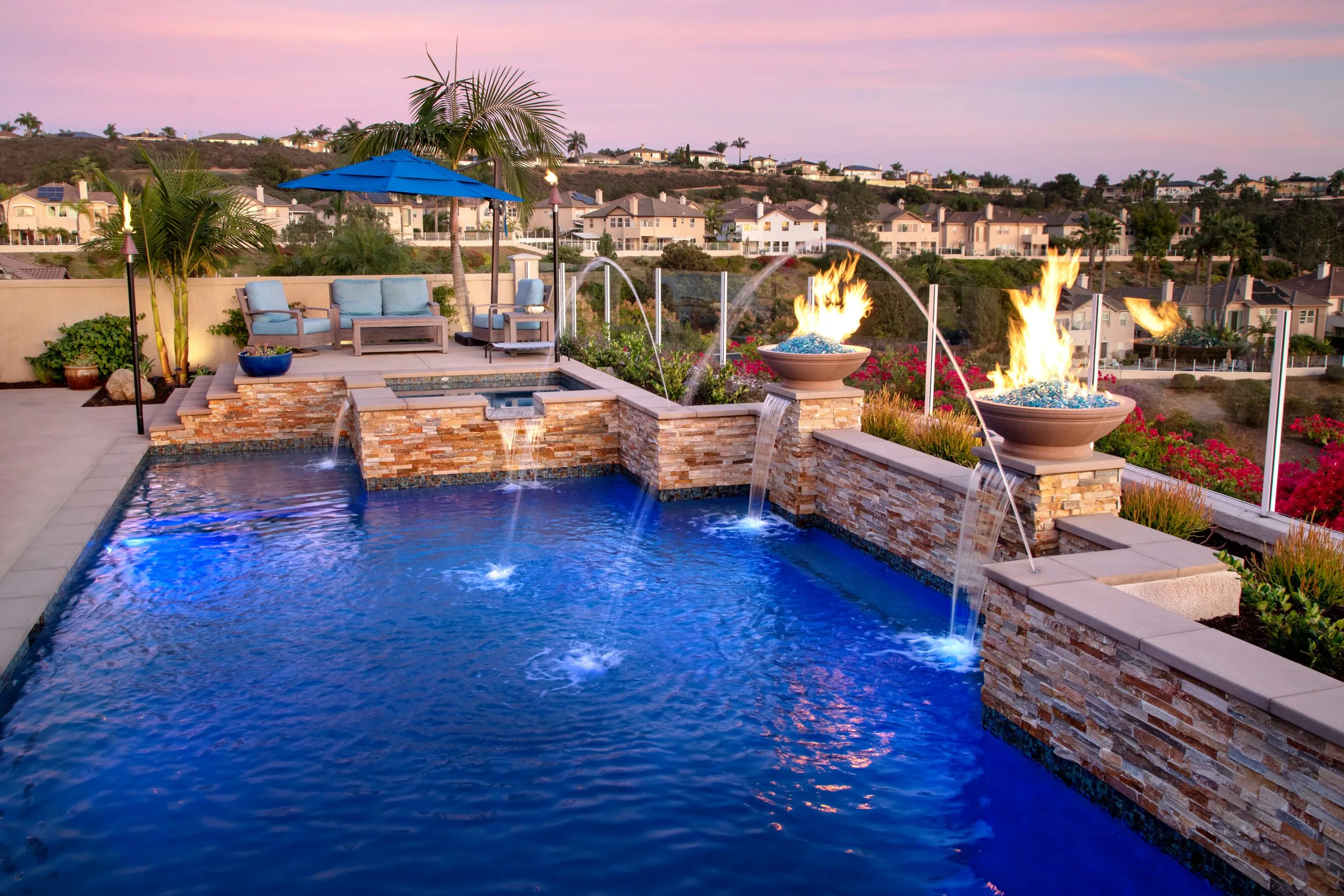

Installing a pool is an exciting venture that can enhance your home and lifestyle. However, the process comes with many questions. Below, we’ve compiled the frequently asked questions about pool installation to guide you through your journey.
The timeline for installing a pool can vary based on several factors, including the type of pool, weather conditions, and the intricacies of your design. Generally, a custom in-ground pool takes 6 to 12 weeks from start to finish.
The price of pool installation can vary widely based on design choices, materials, and site preparation. On average, you can expect to budget between $65,000 and $100,000 for a custom in-ground pool.
For an in-depth look at financial estimates, visit our article on pool installation quotes in San Diego.
There are several options to consider when selecting a pool, including:
Yes, you can convert your pool to saltwater. This process involves adding a saltwater chlorinator that converts salt into chlorine.
For detailed guidance, check out our resource on can I switch my pool to saltwater later on?.
Yes, San Diego has specific regulations regarding filling pools. It’s essential to be aware of local laws to avoid potential fines.
Learn more about this topic by visiting our article on restrictions for filling pools in San Diego.
While it’s more challenging to install a pool in areas with high water tables, it is still possible. Additional engineering may be required to ensure the pool’s structural integrity.
Explore more regarding pool construction in unique locations at our page about installing a pool in a highly watery region.
Customizing your pool can enhance both its appearance and functionality. Some popular features include:
Understanding the frequently asked questions about pool installation will smooth your journey to owning a beautiful pool. As you consider options, remember that quality craftsmanship and personalized design, as offered by Mission Pools, are key to creating your dream outdoor oasis. For more information, do not hesitate to contact us for expert guidance.
DISCLAIMER: The information in this article has been generated by artificial intelligence, not a pool professional. The accuracy of the information in this article has not been verified by Mission Pools prior to publication and will not be updated. Therefore, this article should not be relied upon in lieu of independent research or consultation with a California pool installation or maintenance firm.


