

A swimming pool that wowed in 2008 can feel dated by 2026, and the slow drift from “showpiece” to “tolerable” sneaks up on most homeowners. Plaster roughens, equipment groans, tile fades. Suddenly, you’re spending more weekends fixing your pool than swimming in it.
That’s where swimming pool remodeling earns its place. The right renovation revives the shell you already own, modernizes outdated equipment, and stops cosmetic issues from turning structural.
At Mission Pools, we’ve remodeled Southern California backyards since 1960, so we know exactly where to invest your renovation budget for the biggest long-term return.
Now that you know what’s at stake, the next question is timing. Knowing when to remodel a pool comes down to pattern recognition.
If you’re seeing any of these five issues in your backyard, you’re probably overdue.
Your plaster has a finite lifespan. In fact, industry guidance puts a typical plaster finish at 7 to 10 years before resurfacing makes sense, sooner if your water chemistry has been inconsistent.
Watch for these telltale signs:
Beyond cosmetics, damaged surfaces harbor algae and make cleaning harder, a clear sign your pool has outgrown a routine residential pool maintenance cadence.
Older single-speed pumps, undersized filters, and aging gas heaters quietly drain your bank account every month. According to ENERGY STAR, certified in-ground pool pumps use 20% less energy than standard models, save you roughly $50 a year, and pay for themselves in under two years.
If your equipment predates ENERGY STAR certification, upgrading alone can offset a meaningful chunk of your remodel cost while cutting your monthly energy bill.
Recurring water loss, soft spots in your deck, or repair invoices showing up every quarter usually point to deeper plumbing or shell problems.
The U.S. EPA’s WaterSense program identifies four ways pools lose water, evaporation, cleaning, splashing, and leaks, and pinpointing which one is draining yours is the first step.
Common red flags include:
A proper swimming pool renovation lets crews pressure-test, repair, and reseal everything before new finishes go on top.
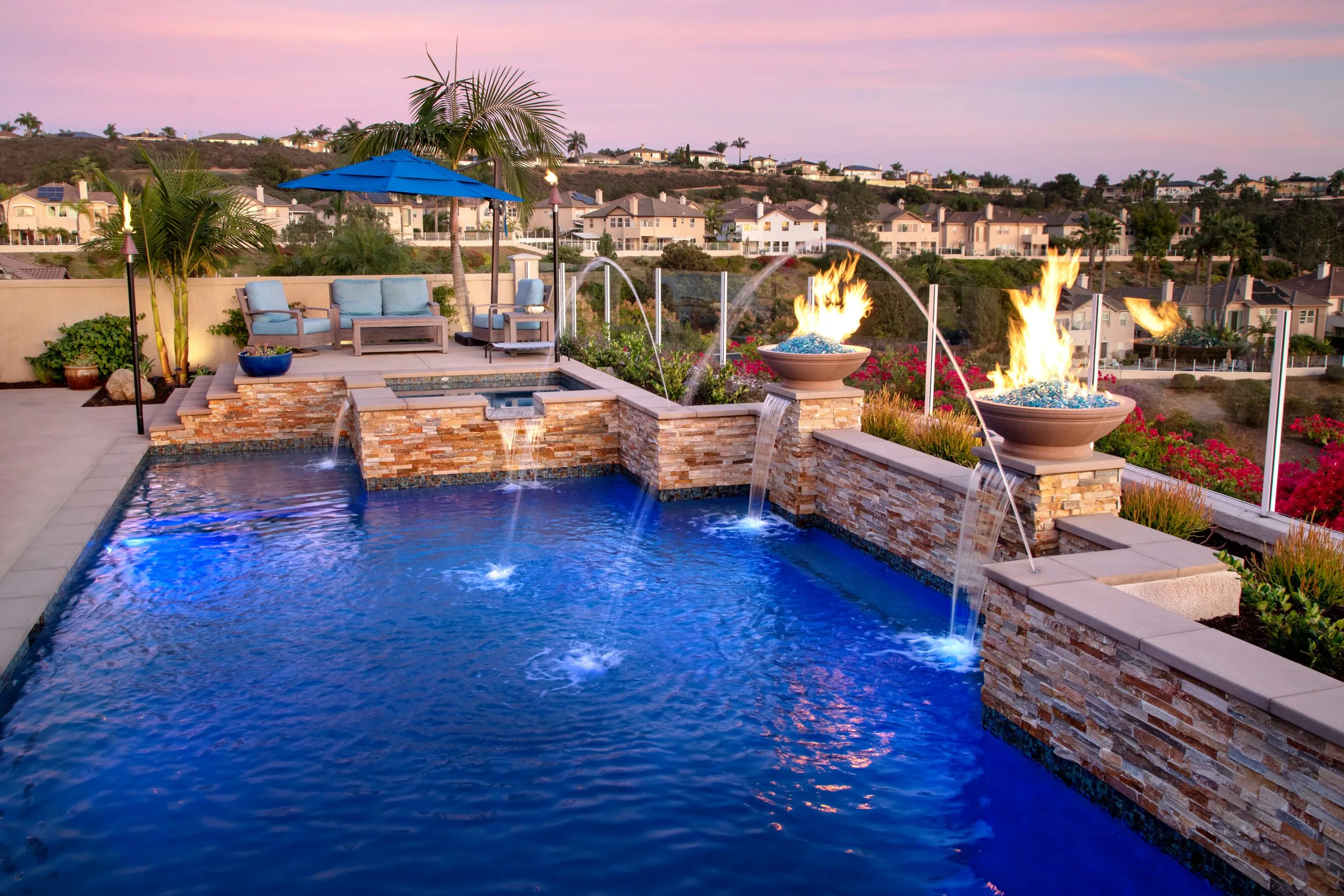
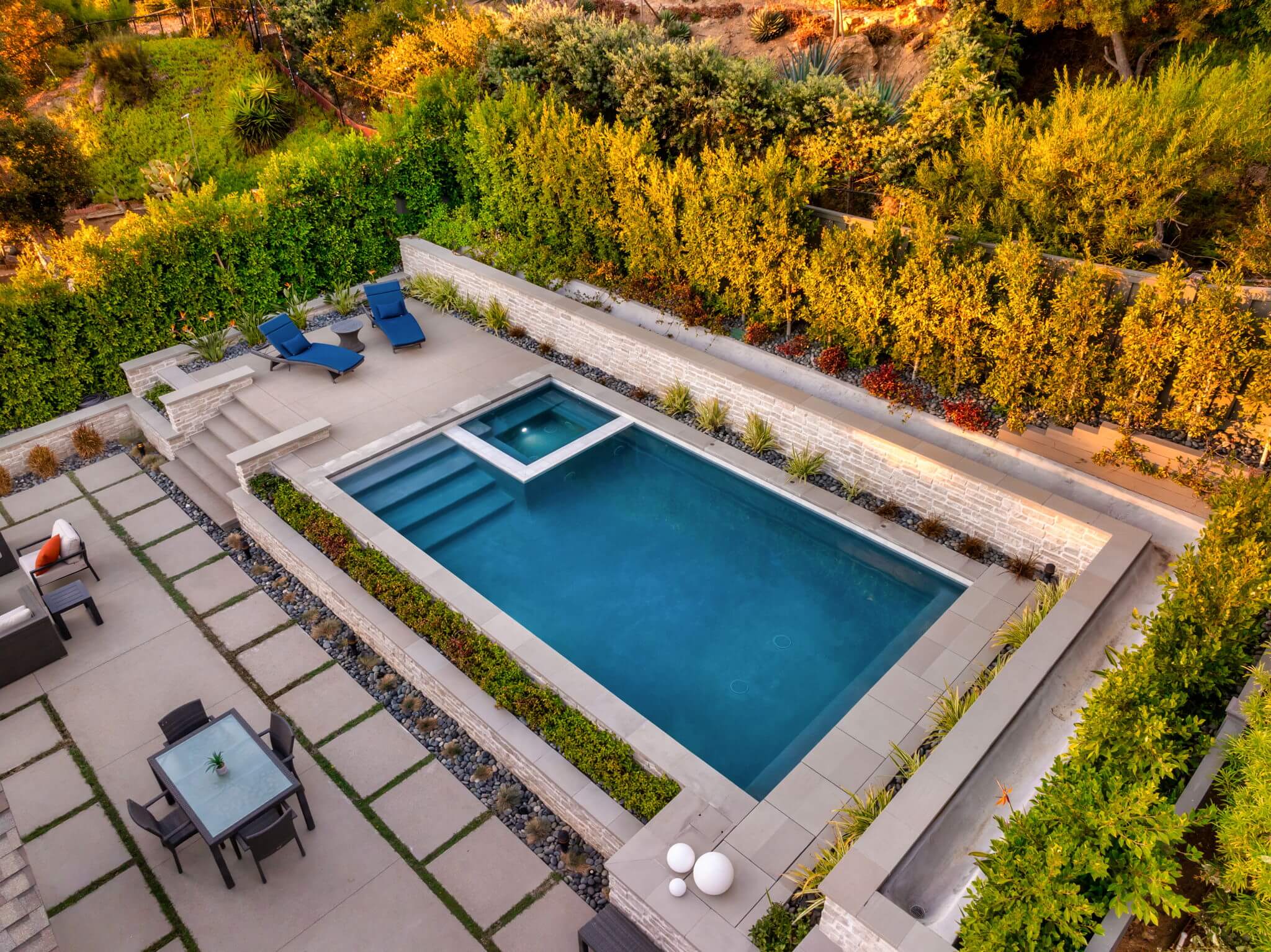
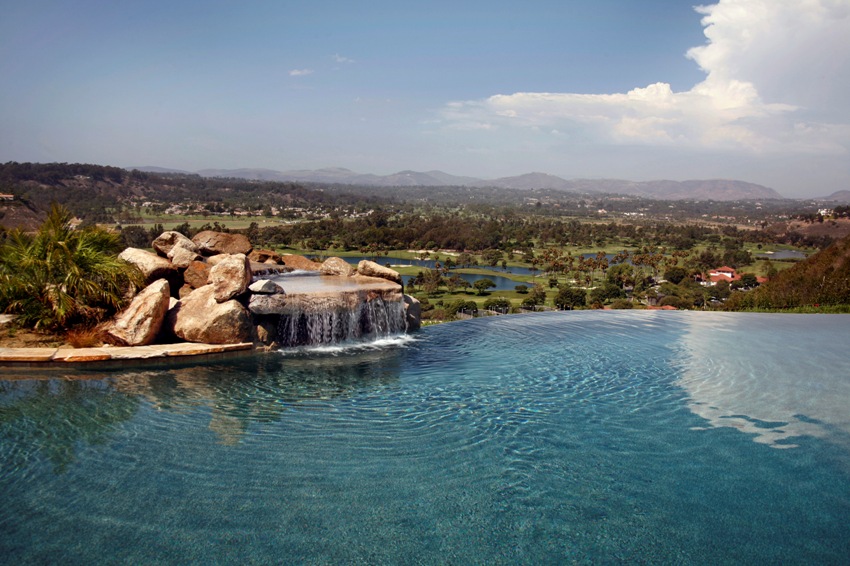
Pool design has shifted dramatically over the past two decades. Square-edge plaster pools with clay-color tile and stamped concrete decks have given way to clean modern lines, glass mosaic accents, vanishing edges, integrated spas, and natural stone finishes.
If your pool still feels stuck in another era, you’re not alone.
Fortunately, the cosmetic side of swimming pool remodeling can transform your entire backyard without touching the structure underneath, and the right pool remodeling ideas often deliver more visual impact than a full rebuild.
Older equipment doesn’t just frustrate you, it puts your family at real risk.
Pre-2008 drain covers fall short of federal safety law under the Virginia Graeme Baker Pool and Spa Safety Act, which requires anti-entrapment covers on every pool. Missing fencing, slick decks, and broken lights stack on top of that risk.
Fortunately, a swimming pool renovation is the natural moment to bring everything up to current code. From there, you stop worrying every time a kid runs across your deck.
Now that you know when your pool needs work, the next question is what to actually upgrade.
The best pool remodeling projects mix cosmetic, structural, and equipment improvements, and the pool remodeling ideas below are the ones we see homeowners choose most often.
We’ve organized them from the simplest cosmetic refreshes to the bigger structural changes that turn your tired pool into a true backyard centerpiece. Each one delivers a strong return on the time and money you put in.
If you tackle one upgrade, make it this one. Replacing worn plaster with a pebble finish (PebbleTec, PebbleSheen), a quartz blend, or a glass bead surface transforms your pool’s appearance, durability, and feel underfoot.
The numbers back it up too. Pebble lasts 15 to 20 years compared to plaster’s 7 to 10, and the deeper color makes your shallow water look richer and more inviting.
After resurfacing, nothing changes your pool’s personality faster than new waterline tile and coping. Each material delivers a different feel:
Most homeowners pair tile and coping updates with resurfacing because the labor overlaps, keeping your overall pool renovation cost lower.
Water features are how you turn your pool into a true retreat. Sheer-descent waterfalls, bubblers on a tanning ledge, deck jets, rain curtains, and scuppers all add motion, sound, and visual depth.
Beyond aesthetics, they actually improve your pool’s filtration by encouraging steady circulation across the surface. That means cleaner water and lower chemical use over time.
Swapping old incandescent fixtures for color-changing LED systems is one of the easiest wins in any remodel.
The U.S. Department of Energy reports that LEDs use at least 75% less energy and last up to 25 times longer than incandescent bulbs.
For your pool, that means fewer fixture replacements, lower energy bills, and the freedom to shift your backyard’s mood right from your phone. Just as importantly, modern lighting dramatically improves safety after dark, especially when kids and guests are around your water.
Adding an attached spa is one of the most popular pool upgrade options for good reason. A spa stretches your usable season into cooler months, doubles as hydrotherapy after long days, and adds a focal point that elevates your entire backyard.
Even better, the plumbing and equipment overlap with your pool, keeping your cost well below that of a freestanding hot tub.
Your deck is often older and harder-worn than your pool itself. Years of sun, chlorine splashing, and foot traffic break it down faster than most homeowners realize.
Fortunately, you have plenty of upgrade options today.
Travertine pavers, large-format porcelain tile, sandblasted concrete overlays, and natural stone all improve safety and aesthetics in one move. Each material brings its own look, but they share one key advantage over older stamped concrete: they stay cooler underfoot in Southern California sun.
That cooling matters in a region where summer decks can reach 140°F. Just as critically, slip-resistant texture is non-negotiable around your water.
Today’s pool equipment looks nothing like what was sold 15 years ago.
Variable-speed pumps, salt chlorine generators, energy-efficient heaters, and smart controllers cut your operating costs while removing the busywork from your weekend.
The latest high-tech swimming pool renovations bring full automation, app control, and smarter sanitation systems together, so you can match the right tech to your lifestyle without overcomplicating things.
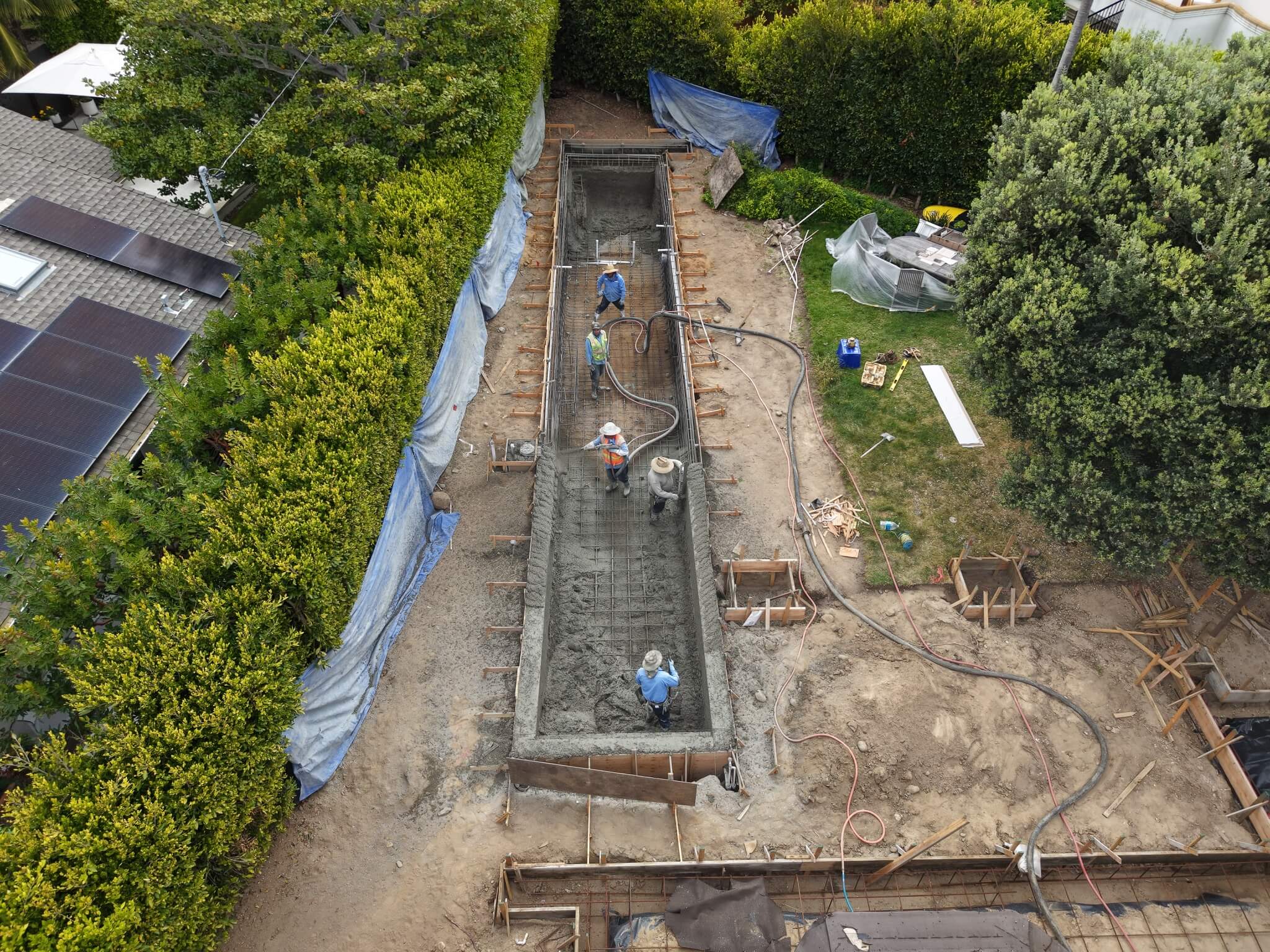
You’ve decided which upgrades fit your goals, so the next question is how the work actually unfolds. Every swimming pool renovation follows roughly the same arc, though your timeline and complexity scale with the scope of work.
Knowing the sequence ahead of time helps you plan around your build instead of reacting to it.
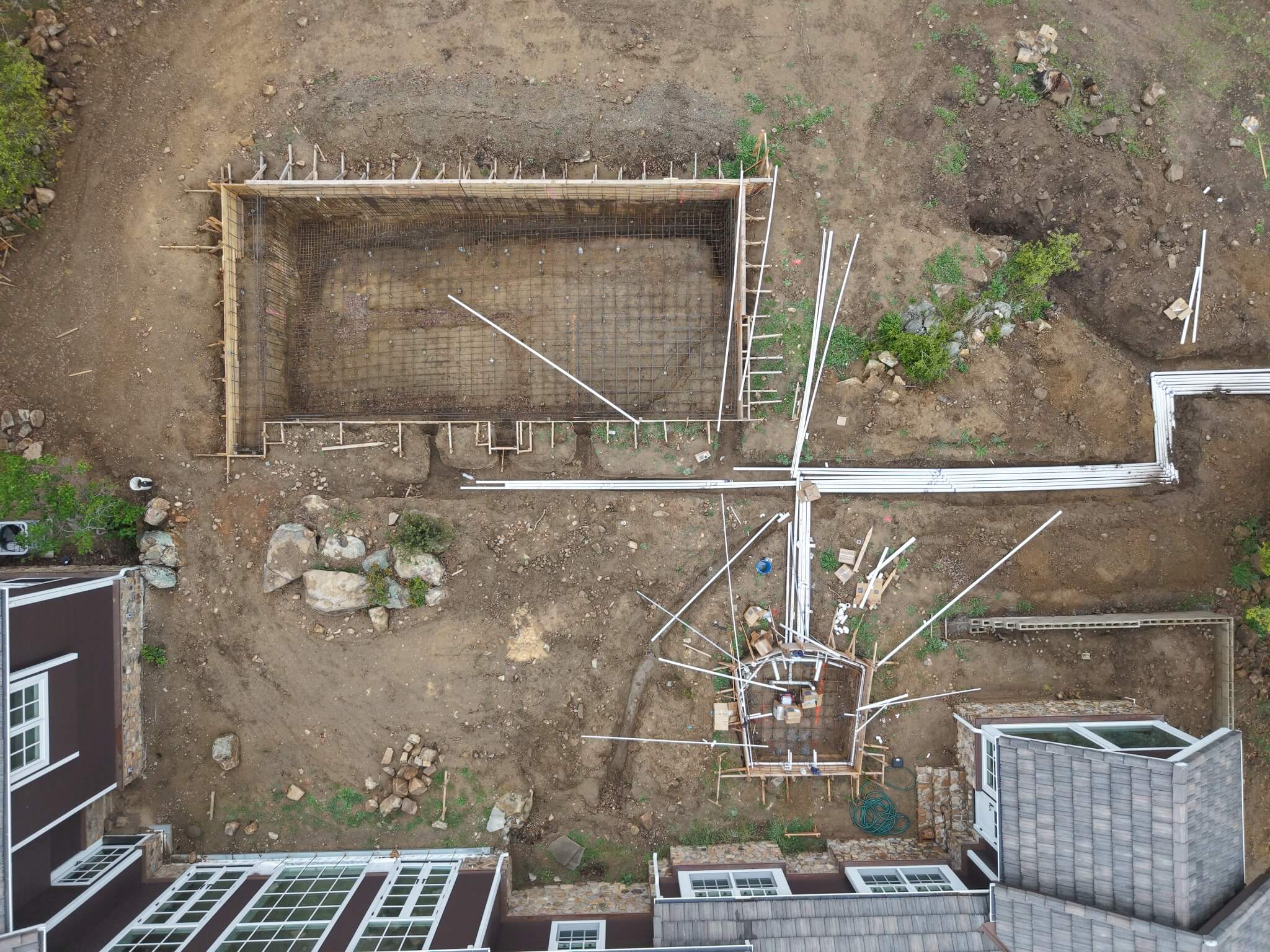
Your remodel starts with a licensed contractor walking your property to inspect the shell, check the equipment pad, and look for hidden issues like settling, leaks, or hairline cracks you may not have noticed.
From there, the conversation gets practical. You’ll talk through what you love about your pool, what frustrates you, and what your realistic budget looks like.
That early honesty is what shapes a remodel you’ll actually be happy with five years from now.
Once your scope is clear, your remodel plan moves from rough notes into a detailed design package.
You’ll see 3D renderings of your finished space, physical finish boards, tile and coping samples in your hands, and an itemized proposal that breaks out demolition, materials, labor, and equipment.
Looking at completed projects helps anchor your decisions too.
Browsing real modern swimming pool designs shows you how finishes, lighting, and water features come together once they leave the moodboard, which is often where homeowners refine their final choices.
With your design locked in, the physical work begins.
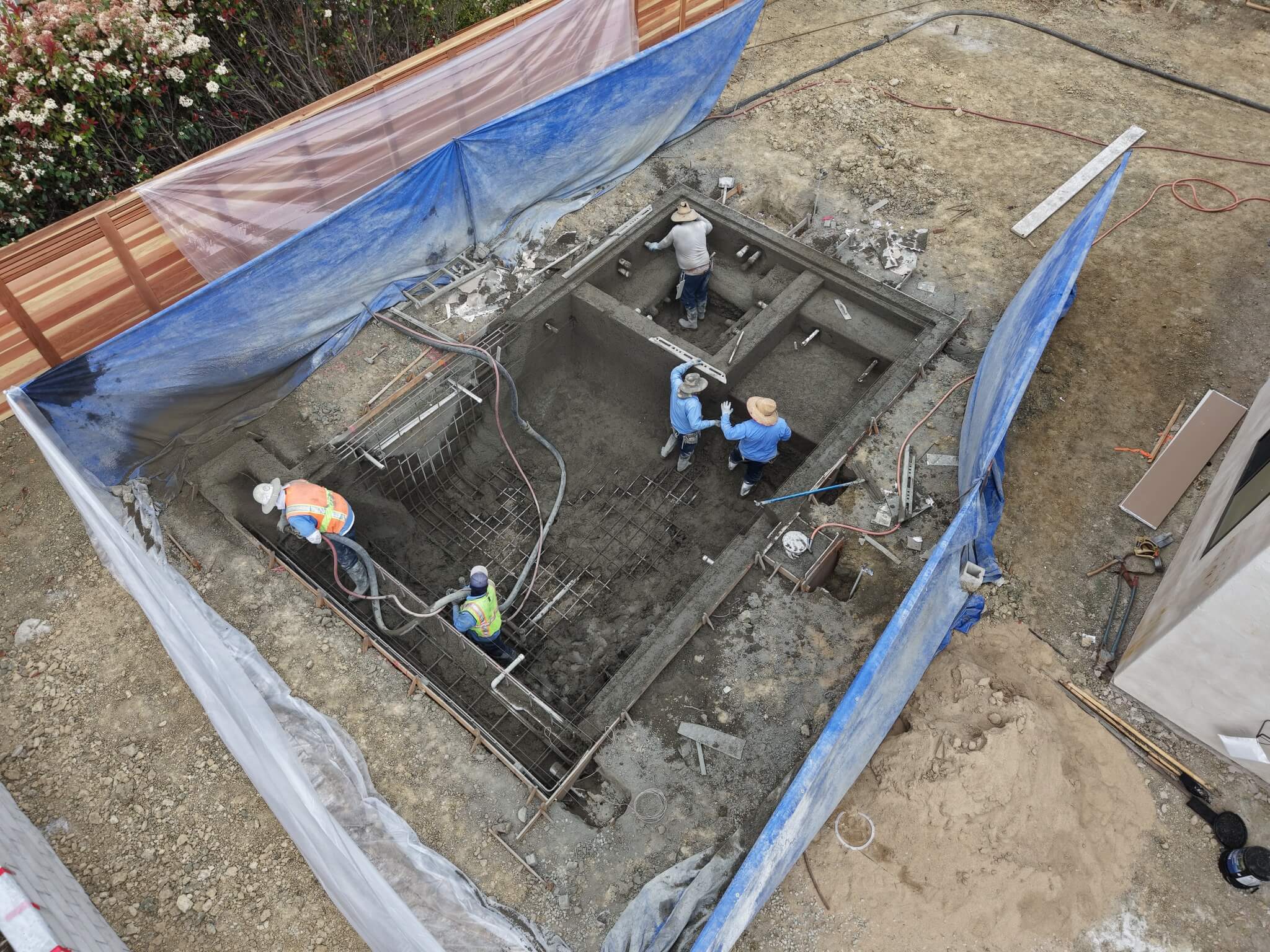
Crews drain your pool safely, chip out old plaster, remove worn tile and coping, and pull any equipment slated for replacement. Heavy demolition runs loud and dusty for 2 to 4 days, but it’s also the fastest-moving stage in your project.
Most homeowners are surprised by how quickly the old pool disappears.
After demolition, your shell is fully exposed, which is when the real diagnostic work happens.
Crews inspect for hairline cracks, plumbing leaks, exposed rebar, and rust spots that have started pushing the surface outward.
Repairing these issues is the entire point of remodeling, because anything you skip will telegraph through your new plaster within a year. Spending a little more here saves you thousands later.
With repairs locked in, the visual transformation begins. Tile and coping go in over a fresh bond beam, water features get framed and waterproofed, and your new interior surface (pebble, quartz, or glass) is troweled in by skilled finishers.
Once the cosmetic work takes shape, lighting and any new plumbing for spas, bubblers, or deck jets get wired and pressure-tested before water ever touches your pool.
After the finishes set, your equipment comes alive. Crews install and integrate the full system, including:
With every component connected, your pool fills slowly, allowing the new finish to cure evenly without staining or shrinkage cracks. Crews then balance your water chemistry and walk you through every piece of new equipment, app, or controller, so you actually know how to run your pool before they leave your property.
National averages don’t tell the Southern California story. HomeGuide pegs the U.S. average inground pool remodel at $5,000 to $30,000, but that figure pools cheap resurfacing jobs from low-cost markets with full renovations. Locally, the picture looks very different.
Angi reports the average Los Angeles pool remodel at $15,876, with most homeowners spending between $8,484 and $23,386, but those numbers mostly reflect surface-only work rather than comprehensive remodels.
The biggest cost drivers are pool size, finish material, shell condition, and how many add-ons you bundle. A surface refresh sits at the low end, while a full-scope remodel involving new plumbing, equipment, tile, coping, and finishes lands far above the published averages.
Always ask for an itemized proposal so you see exactly where each dollar lands. If you’d rather spread the project over time, our swimming pool financing options walk through loan structures and rate ranges most homeowners qualify for.
Timing your remodel around the off-season pays you back twice. Fall and winter mean shorter contractor lead times, faster material delivery, and disruption during months you weren’t swimming anyway.
The demand is real, too. The Pool & Hot Tub Alliance, the trade association representing the $62 billion pool industry, found that 42% of pool companies saw revenue jumps from remodel work in 2025, while only 21% reported declines.
That gap shows where homeowner spending is shifting, and why booking ahead matters.
Starting your swimming pool renovation in October or November typically lands your splash-and-go date between February and April, giving you the full summer ahead.
The honest answer depends on your shell’s condition and how much you want to change.
Remodeling almost always wins on price and timeline when your structure is sound. A new build wins when your existing layout no longer fits your life or the shell is failing in ways that can’t be patched.
Use the comparison below to ground your decision before you commit to either path.
| Factor | Swimming Pool Remodeling | New Pool Build |
| Typical cost | $5,000 to $100,000+ depending on scope | $50,000 to $150,000+ for inground builds |
| Timeline | 4–8 weeks for a typical project; 5–7 days for resurfacing work (1–2 weeks before you can swim, including curing) | 8–12 weeks of construction (some builders cite 8–16 as more realistic), plus 2–8 weeks for design and permitting (permitting alone 2–6 weeks, 6–8 in strict CA/NY/FL jurisdictions) |
| Backyard disruption | Limited to the pool footprint and equipment pad | Full excavation, heavy equipment, and a deeper landscape impact |
| Customization ceiling | Cosmetic and equipment changes, with some shape modification | Complete control over shape, depth, zones, and features |
| Permits required | Often minimal for resurfacing, full permits for plumbing or shell repairs | Building, electrical, plumbing, and fencing permits |
| Best when | Your shell is structurally sound, and you want a fresh look | Your pool is beyond repair or no longer fits your lifestyle |
| Not ideal when | The shell shows major cracking, leaks, or structural failure | Your existing pool is in good shape, and changes are surface-level |
| Resale impact | Refreshed look protects your existing pool value | Adds the most resale lift, especially in pool-friendly markets |
Most projects we see lean toward remodeling rather than rebuilding.
If your shell still holds water and your layout works for your family, swimming pool remodeling can deliver roughly 80% of the visual impact at a fraction of the cost.
That said, a few situations genuinely call for a new build. Pools with serious structural issues, layouts that no longer fit modern lifestyles (think tight-deep diving pools where you’d rather have a tanning ledge), and pools placed poorly relative to sun, slope, or yard use usually benefit from a fresh start.
Your contractor decides whether your remodel lasts 20 years or starts cracking within 2. Before signing anything, verify a current California C-53 pool license, liability and workers’ comp insurance, and a portfolio matching the look you want.
A few practical things to weigh during your search:
Mission Pools’ 60-plus year track record across San Diego and Riverside is why homeowners trust us with both new builds and full renovations.
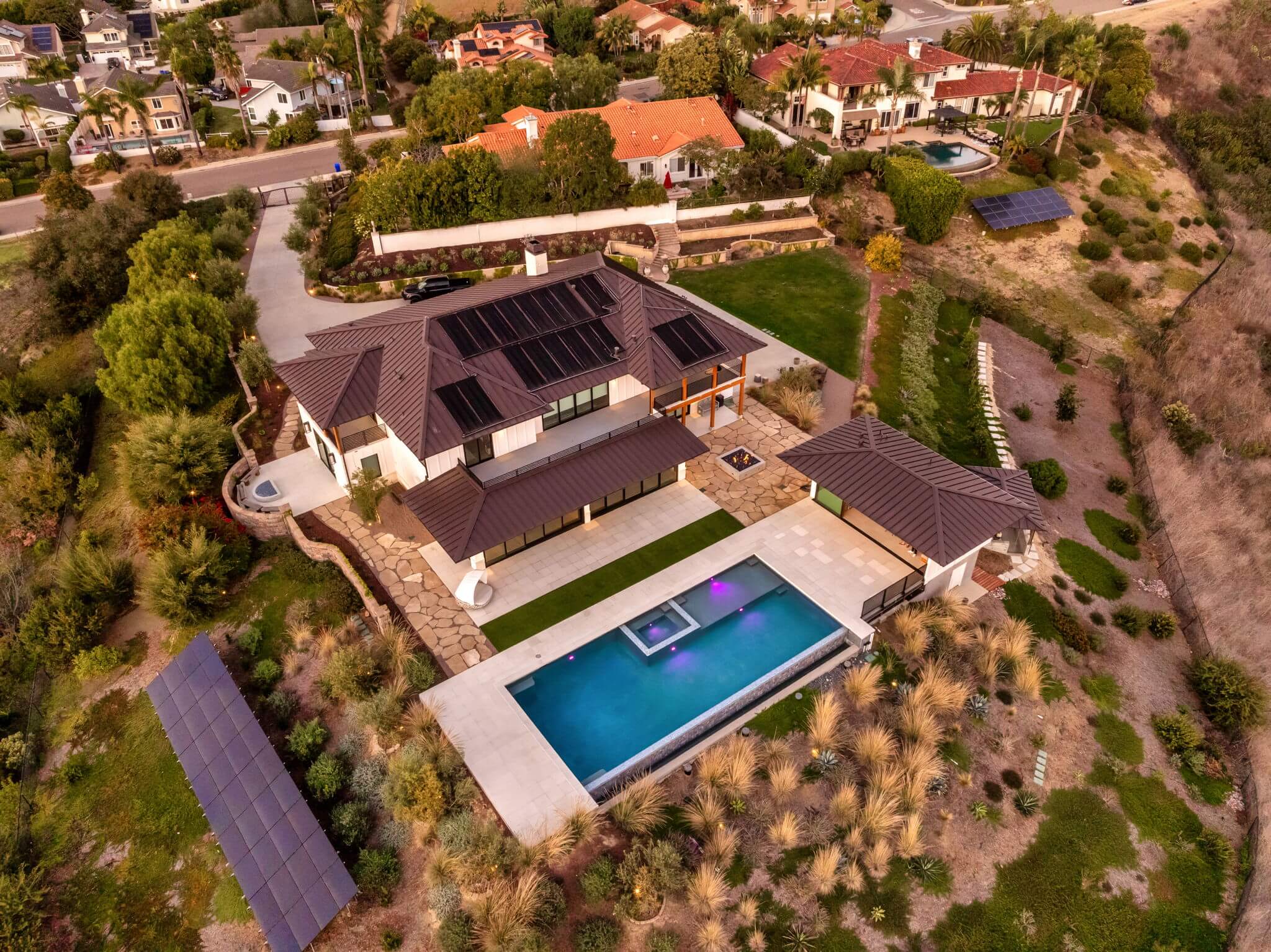
When your shell is sound but your finishes, equipment, or layout drag the experience down, swimming pool remodeling is the smartest move. A focused renovation extends your pool’s life another 20 years and modernizes how it runs.
At Mission Pools, we’ve delivered that across Southern California since 1960. Book your free pool assessment and let’s walk your backyard together.
A basic resurfacing wraps in 2 to 3 weeks. Mid-range swimming pool remodeling projects with new tile, coping, and water features run 4 to 6 weeks. Full renovations involving structural repairs and equipment overhauls can stretch to 8 to 10 weeks.
Yes, almost every homeowner stays at home through the entire swimming pool renovation.
Expect daily noise during demolition and shotcrete phases, dust drifting across your patio, and trucks coming and going for several weeks.
Even correctly installed plaster needs replastering around the 10-year mark, per Bob Vila, while aggregate finishes like pebble can last 10 to 20 years, per the same source. The right builder protects you from premature failure, not the material’s natural lifespan. Watch for spider cracks, mineral staining, hollow spots, or a sandpaper feel underfoot.
Yes, and the National Association of Realtors ranks inground pools as the highest-Joy-Score outdoor project, with roughly 56 percent cost recovery on resale. In Southern California’s pool-friendly market, a clean remodel often pays back twice.
Resurfacing leads the list because it changes how every visible square foot looks and feels. Pebble finishes paired with new tile, LED lighting, and a variable-speed pump form the most common pool upgrade options in Southern California remodels today.
You know . . . you just do not wake up one day and decide you can be someone’s partner in business. Strong relationships take...

Southern California is known for a lifestyle second to none. Our area that started out as an arid desert has now become a land of...
Yesterday was an example of why my brother and I enjoy this business so much. Contracting is all about solving problems…problem/solution management.


